


Ocean-safe skincare means choosing formulas and packaging that minimize harm to marine ecosystems, especially coral reefs. The fastest way to start: swap your current sunscreen for a mineral (non-nano zinc oxide) formula and skip anything listing oxybenzone or octinoxate. Those two chemical filters are widely flagged as coral bleaching contributors, and they show up in more products than most shoppers realize. Miamibeachbum built its ingredient decoder with a marine scientist specifically so you don’t have to squint at a label in the drugstore aisle guessing what’s reef-safe and what’s just marketed that way.
Before you check out, run through this:
- Look for “non-nano zinc oxide” or “titanium dioxide” as the active ingredient, not a chemical filter blend.
- Scan the first five ingredients for oxybenzone, octinoxate, or octocrylene, and put it back if you find them.
- Check for microplastic ingredients (look for “polyethylene” or “acrylates copolymer” on the label).
- Favor waterless or concentrated formats when you can. They need fewer preservatives.
Key Takeaways
Ocean-safe skincare requires mineral UV filters, ingredient-label literacy, and packaging awareness working together, not any single product choice alone.
| Point | Details |
|---|---|
| Choose mineral sunscreen first | Non-nano zinc oxide or titanium dioxide protects skin without the coral bleaching risks tied to oxybenzone and octinoxate. |
| Read the first five ingredients | Most red flags, including chemical filters and microplastics, show up early in the ingredient list. |
| “Reef-safe” isn’t regulated | Treat the phrase as a marketing cue, not a guarantee, and verify claims against the actual formula. |
| Packaging matters as much as formula | Refill systems, PCR materials, and avoiding glitter or microbeads cut ocean impact beyond the ingredient list. |
| Miamibeachbum builds by category | Blocked SPF50, Bum + Body Cream, Totally Buggin’, Hair Shield, and Coco Body Scrub each cover a distinct part of a reef-safe routine. |
Table of Contents
- What Does Ocean-Safe Skincare Actually Mean?
- Which Ingredients to Avoid, and What to Use Instead
- How Do You Choose a Reef-Safe Sunscreen?
- How Do You Spot Greenwashing on a Skincare Label?
- Why Packaging and Disposal Matter as Much as the Formula
- Miami Beach Bum’s Marine Scientist Resources
- Does Ocean-Safe Skincare Work for Every Skin Type?
- What Certifications Actually Mean Something?
- Choosing Ocean-Safe Products Beyond Sunscreen
- Best Practices for Getting the Most From Your Routine
- The Gap Between Reef-Safe Marketing and Reef-Safe Formulation
- Build Your Ocean-Safe Routine With Miami Beach Bum
- Sources
What Does Ocean-Safe Skincare Actually Mean?
The term covers three overlapping goals: protecting coral and marine life from chemical runoff, cutting microplastic pollution, and sourcing ingredients in ways that don’t strip wild habitats bare. It applies to sunscreens most visibly, but the same logic extends to body lotions, shampoos, bug repellents, and makeup that eventually rinses off your skin and into a shower drain, a lake, or the ocean itself.
Here’s the part that trips people up: “reef-safe” is not a regulated term in the United States. No agency audits a bottle before a brand slaps that phrase on the front. A company can print “reef-safe” on packaging that still contains octinoxate, because there’s no legal definition stopping them. That’s not necessarily deception. It’s often just marketing shorthand for “we thought about this,” applied loosely. Miamibeachbum’s own breakdown of what reef-conscious beauty actually means digs into how inconsistent that labeling can get across the industry.
What this means practically: you can’t outsource your judgment to a front-label claim. You have to check the ingredient list yourself, or trust a brand that’s already done that scrutiny publicly. Sunscreen gets the most attention because it’s applied in bulk right before people jump into the water, but leave-in conditioners, body scrubs, and lotions matter too. Anything you rinse off in an outdoor shower at the beach, or wash down a drain that leads to a treatment plant not designed to filter every synthetic compound, is part of this equation. Biodegradable beauty isn’t a niche category anymore. It’s becoming the baseline expectation for anyone shopping with intention.
Which Ingredients to Avoid, and What to Use Instead
Three chemical UV filters dominate the “avoid” list: oxybenzone, octinoxate, and octocrylene. Conservation groups and lab researchers have linked oxybenzone and octinoxate to coral bleaching and developmental stress in coral larvae, which is why Hawaii and Key West both restricted their sale years ago. Octocrylene gets flagged less often but raises similar concerns, plus it can degrade into benzophenone, a compound with its own toxicity questions.
These are the main offenders to check for on a label:
- Oxybenzone (also listed as benzophenone-3)
- Octinoxate (octyl methoxycinnamate)
- Octocrylene
- Microplastic exfoliants (polyethylene, nylon-12, acrylates copolymer)
- Certain long-lived synthetic preservatives that don’t break down readily in water
- Synthetic fragrance blends that can carry undisclosed UV-reactive compounds
Reef impact snapshot: Conservation guidance and lab studies consistently point to oxybenzone and octinoxate as coral stressors, which is the single biggest reason mineral filters have become the default recommendation for anyone swimming, snorkeling, or showering near a reef system.
The safer swap is mineral, not chemical. Non-nano zinc oxide sits on the skin’s surface and reflects UV rays physically rather than absorbing them chemically, and its particle size is large enough that it doesn’t penetrate coral tissue the way nano-sized particles or dissolved chemical filters can. Titanium dioxide works similarly and often pairs with zinc in formulas that need a lighter texture. Non-nano zinc is the filter most consistently recommended across reef conservation guidance, precisely because the particle size question is the whole ballgame with mineral sunscreens.
Beyond sun filters, biodegradable surfactants (the cleansing agents in body washes and shampoos) break down faster in wastewater than older sulfate blends. And a growing number of brands now use biotech-derived marine actives, meaning ingredients like algae extracts or marine peptides grown in controlled lab cultures instead of harvested from wild reef systems. It’s a quiet but meaningful shift: you get the same skin benefit without pulling material out of an ecosystem that’s already under pressure.
How Do You Choose a Reef-Safe Sunscreen?
Choosing the right sunscreen is the single highest-leverage decision in your ocean-safe routine, because sunscreen washes off in volume, all at once, usually right where people are swimming. Here’s how to get it right.
- Check the active ingredient first. Non-nano zinc oxide or titanium dioxide should be listed as the active, not buried in an inactive ingredients section behind a chemical filter blend.
- Confirm broad-spectrum coverage. This means the formula blocks both UVA and UVB rays, not just the UVB rays that cause visible burning.
- Read the water-resistance claim literally. “Water resistant (80 minutes)” is a tested duration, not a suggestion. Reapply once that window closes, every time.
- Apply generously, 15 to 20 minutes before you’re in the sun. Mineral formulas need a moment to settle, and a thin layer won’t hit the SPF number printed on the bottle.
- Reapply after toweling off, not just after swimming. Toweling removes as much sunscreen as a dip in the water does.
- Layer with clothing and shade for long beach days. A rash guard or hat cuts your reapplication needs and your total chemical load in the water.
Pro Tip: Apply sunscreen at home, at least 15 minutes before you leave, instead of standing at the water’s edge. It gives mineral formulas time to set on skin instead of rinsing straight off the moment you wade in.
One caution: even a sunscreen labeled “reef-safe” deserves a second look at the ingredient panel. Some brands use that phrase while still including octocrylene or a nano-sized zinc particle, which behaves more like a chemical filter in terms of ocean absorption. The label is a starting point for your attention, not a substitute for it.
How Do You Spot Greenwashing on a Skincare Label?
Reading a label well takes about 30 seconds once you know the pattern. Start with the first five ingredients, since they make up the bulk of the formula by volume. If oxybenzone, octinoxate, or a fragrance blend with no further disclosure shows up early, that’s your answer regardless of what the front of the bottle promises.
- Search the ingredient list for “non-nano” specifically next to zinc oxide. If it just says “zinc oxide” with no particle size disclosed, contact the brand or assume it might not be non-nano.
- Scan for microplastic markers: polyethylene, polypropylene, nylon, or “acrylates copolymer” in an exfoliating product.
- Look for a published exclusion list. Brands confident in their formulation will tell you exactly what they leave out, not just what they include.
- Check for sourcing transparency on marine-derived ingredients like algae or seaweed extracts. Wild-harvested versus lab-cultured makes a real difference in ecological footprint.
A brand that publishes a conservative exclusion list, ideally one written or reviewed by a named scientist, does more to reduce shopper confusion than any front-label claim ever could. Fairtrade’s sustainability reporting points to exactly this kind of transparency and supply-chain disclosure as the trend separating credible brands from marketing dressed up as conservation.
Formulation format matters too. Waterless products, think solid balms, concentrated sticks, or anhydrous creams, need far fewer synthetic preservatives than water-based lotions, since bacteria simply can’t grow the same way without water as a medium. That’s a formulation-level signal of ocean-friendliness that most shoppers never think to check, and it’s one reason concentrated formats are worth seeking out even outside of sunscreen.
Why Packaging and Disposal Matter as Much as the Formula
A sunscreen can be perfectly reef-safe in its ingredient list and still cause harm through its packaging. Microplastic beads and cosmetic glitter are two of the worst offenders here: they don’t biodegrade, marine animals mistake them for food, and once they’re in the water column there’s no practical way to remove them.
Packaging choices you can actually act on:
- Choose refill systems or concentrate pouches when a brand offers them. Less plastic manufactured means less plastic that can eventually reach a waterway.
- Look for post-consumer recycled (PCR) plastic or genuinely compostable packaging, and be skeptical of vague “eco-friendly” claims with no material specifics.
- Skip products with cosmetic glitter entirely. There’s no reef-safe version of loose glitter.
- Never rinse sunscreen or lotion off gear, coolers, or your body directly into a lake, ocean, or storm drain. Rinse indoors where wastewater gets treated.
- Travel with solid or stick formats when possible. They pack lighter, spill less, and typically use less packaging overall.
Sustainable skincare is as much about what happens after you’re done with the bottle as what’s inside it. A brand that’s transparent about ingredients but ships everything in virgin plastic clamshells is only halfway there.
Miami Beach Bum’s Marine Scientist Resources
Every product decision at Miamibeachbum runs through a simple filter: would a marine scientist sign off on this ingredient list? That’s the premise behind the brand’s ingredient decoder, which breaks down exactly which sunscreen filters to avoid and why, so you can scan a label in the time it takes to read this sentence.
Two routines worth building around:
- Beach day: mineral SPF applied 15 minutes before sun exposure, reapplied after toweling off, paired with a leave-in hair product that shields strands from salt and UV without silicone buildup.
- After-sun care: a gentle body scrub to lift salt and sand residue, followed by a soothing body cream to calm irritation and lock in moisture before it evaporates.
The brand’s transparency signals worth knowing about: published exclusion lists, marine scientist involvement in formulation review, and a running library of educational resources like the reef-conscious beauty overview and body care guidance for uneven skin tone.
Does Ocean-Safe Skincare Work for Every Skin Type?
Mineral sunscreens carry a reputation for leaving a white cast, and older formulas earned it. Newer non-nano zinc formulations tint and blend far better on medium and deep skin tones than the chalky versions from a decade ago, though it’s worth patch-testing before a big beach trip if you have deeper skin and you’re trying a new formula for the first time.
For sensitive or acne-prone skin, mineral filters are usually the gentler choice anyway. Zinc oxide has mild anti-inflammatory properties and doesn’t trigger the stinging or breakout reactions some people report with chemical filters. If you deal with body breakouts or ingrown hairs, especially around areas covered by swimwear, a cream formulated to calm irritation without pore-clogging silicones matters more than most people realize.
Dry or eczema-prone skin benefits from richer, waterless balm formats that layer moisture without needing heavy preservative systems. Oily and combination skin types tend to do better with lighter mineral lotions rather than balms, since a heavier base can feel occlusive in humid, sweaty conditions. There isn’t a single ocean-safe formula that suits everyone, the same way there isn’t one conventional formula that suits everyone. The category is broad enough now that skin type shouldn’t be the reason someone skips reef-safe products altogether.
What Certifications Actually Mean Something?
No single government body in the United States currently certifies a product as “reef-safe,” which is exactly why the term stays unregulated on packaging. What does exist are more targeted signals worth understanding.
Hawaii and Key West have banned retail sale of sunscreens containing oxybenzone and octinoxate, a legal standard that at least defines two ingredients clearly, even if it doesn’t cover octocrylene or nanoparticle concerns. Some third-party organizations run their own reef-safety evaluations and certification marks, though standards vary between them, so a certification logo is a starting point for research, not a final word.
Broader sustainability certifications, like Fairtrade sourcing standards, don’t address reef safety directly but do speak to supply-chain transparency and ethical sourcing, which correlates with brands willing to publish detailed ingredient disclosures. Until a unified federal or international reef-safe standard exists, your best certification is still a brand’s own published exclusion list, ideally one attributable to a named scientist rather than an anonymous “sustainability team.”
Choosing Ocean-Safe Products Beyond Sunscreen
Sunscreen gets the spotlight, but cleansers, moisturizers, and makeup deserve the same scrutiny, since they wash down drains in far greater volume over a lifetime than sunscreen does.
For cleansers and body washes, check for biodegradable surfactants and skip formulas loaded with microbeads marketed as “exfoliating.” A body scrub using ground shells, sugar, or coconut fiber does the same job without leaving permanent plastic residue in the water table. For moisturizers, waterless or concentrated balms reduce preservative load, and marine-derived actives sourced from biotech cultivation rather than wild harvesting protect the same reef systems your sunscreen choices already account for.

Makeup is the most overlooked category. Many mineral-based foundations and powders use the same non-nano zinc or titanium dioxide filters as sunscreen, so the same label logic applies: check the first ingredients, skip synthetic UV filters, watch for glitter or shimmer particles that are really just microplastic in disguise. Building a full ocean-friendly routine means applying this same three-question checklist (active ingredients, particle size, packaging) to every product category, not just the one you slather on before a swim.
Best Practices for Getting the Most From Your Routine
The environmental benefit of ocean-safe skincare depends entirely on consistent use, not occasional purchases. Buying one reef-safe sunscreen for a vacation while using conventional chemical filters the rest of the year barely moves the needle, since most sunscreen exposure to waterways happens through everyday showers and laundry runoff, not just beach trips.
Apply mineral sunscreen daily, not just for swimming, since UV exposure and its downstream rinse-off happen every time you shower regardless of whether you went near water that day. Store products properly. Heat and direct sun exposure can degrade mineral formulas faster than chemical ones, so keep bottles out of a hot car or direct beach sun between applications. Finish your current chemical-filter products before switching, when possible, rather than discarding partially used bottles. Reducing landfill waste is part of the ocean-safety equation too. Pair your skincare choices with basic habits like rinsing off indoors after a swim instead of at an outdoor beach shower that drains straight to a storm system, and you’ve closed most of the gap between good intentions and actual reef impact.
The Gap Between Reef-Safe Marketing and Reef-Safe Formulation
Most of the conventional advice on this topic stops at “avoid oxybenzone,” and that’s genuinely useful but nowhere near sufficient. The bigger blind spot is nanoparticle size, packaging format, and preservative load, three factors that rarely make it into a five-second Instagram infographic about reef safety. A sunscreen can skip every chemical filter on the banned list and still use nano-sized zinc that behaves more like a dissolved chemical in seawater than a physical mineral barrier.
What actually moves the needle is treating this as a formulation question, not a checklist question. Waterless formats, biotech-derived marine actives instead of wild-harvested ones, and published exclusion lists from people with real scientific credentials do more collective good than any single “reef-safe” sticker. If there’s one priority for a first-time shopper, it’s this: stop trusting the front label and start reading the first five ingredients, every time, on every product category, not just sunscreen.
— Ayssa
Build Your Ocean-Safe Routine With Miami Beach Bum
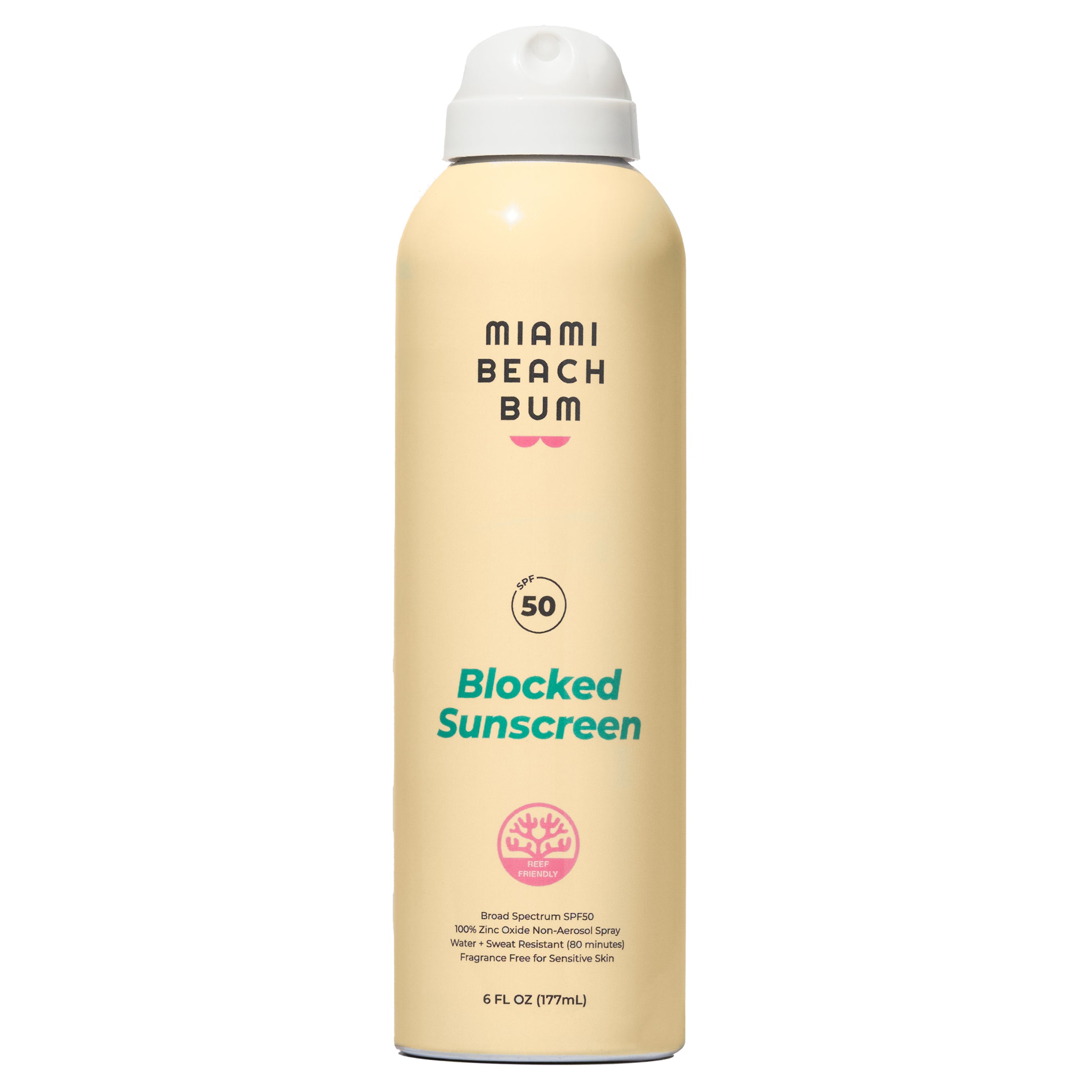
Every product in a reef-safe routine has a specific job, and Miamibeachbum built its lineup around exactly that logic instead of a single catchall formula. Blocked SPF50 is the mineral sun protection piece, formulated around non-nano zinc oxide so you get broad-spectrum coverage without the reef concerns tied to chemical filters.
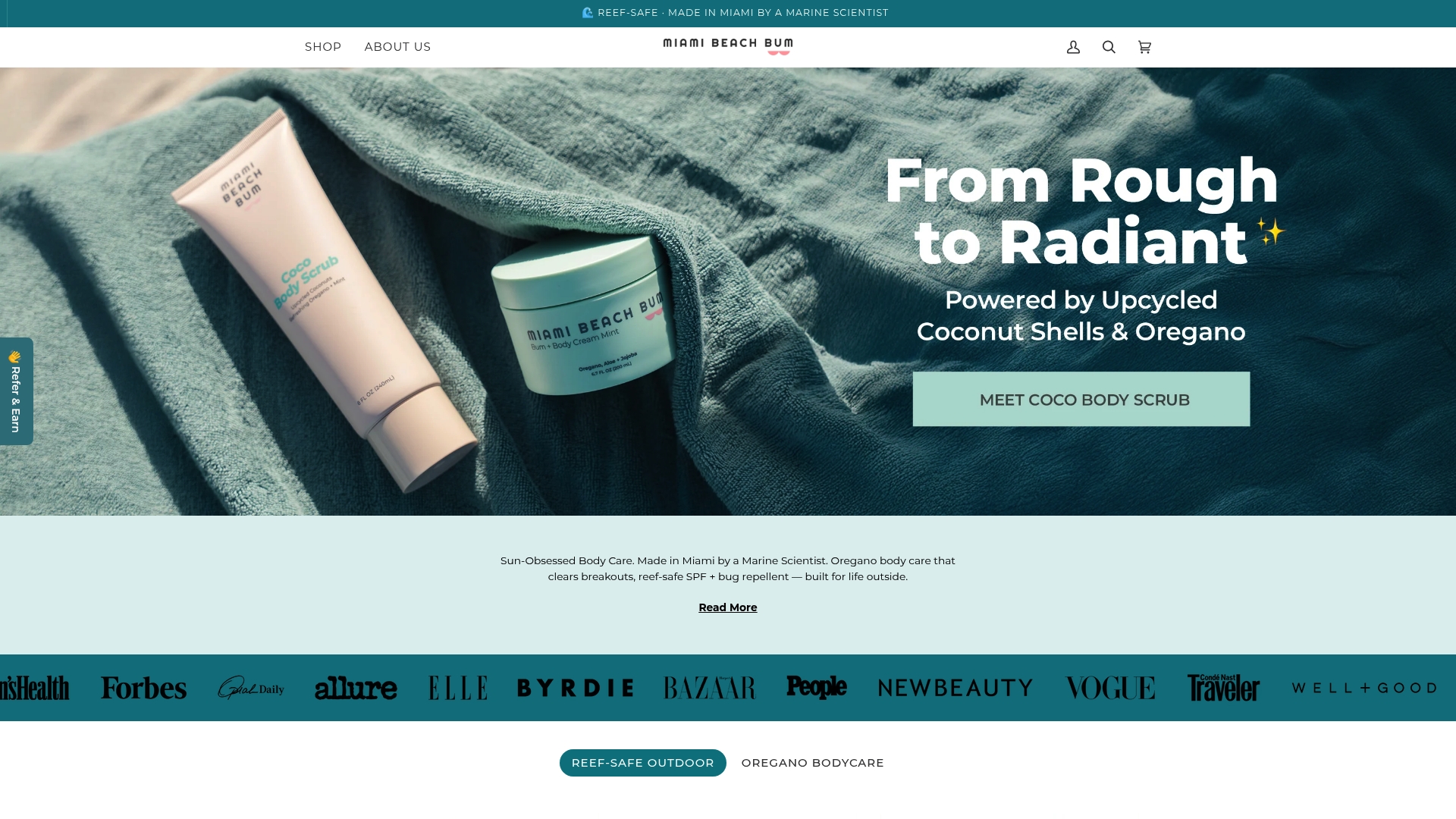
For after-sun care and everyday body maintenance, Bum + Body Cream targets razor burn and body breakouts without the heavy silicones that clog pores in humid, sweaty conditions. Pair it with Coco Body Scrub for eco-friendlier exfoliation that lifts salt and sand residue without plastic microbeads. Heading outdoors for the day? Totally Buggin’ handles bug protection with botanical ingredients instead of synthetic repellents, and Hair Shield keeps strands protected from salt and UV without buildup.
If you’re starting from scratch, the Bodycare Discovery Set bundles the essentials into one easy starter kit, so you’re not guessing which product to try first. Curious about the marine science behind the formulas? The Our Story page lays out exactly who’s behind the ingredient decisions and why. Browse the full lineup and build a routine that protects your skin and the water you swim in.
Sources
- Fairtrade forecasts transparency, regenerative programs and private-label opportunities in 2024
- About reef-safe sunscreen (Save The Reef)