


Yes: topical vitamin C creates a brighter, more even complexion by neutralizing free radicals and slowing excess pigment production. It’s not a myth or a marketing trick. The Cleveland Clinic confirms this antioxidant works at concentrations between 10% and 20% when used consistently.
Three mechanisms drive the glow:
- Antioxidant action neutralizes free radicals from UV rays and pollution
- Melanin inhibition slows new pigment formation and fades dark spots
- Collagen support improves texture so skin reflects light more evenly
The simplest action you can take today: apply vitamin C serum every morning, then follow it with sunscreen.
Key Takeaways
Vitamin C serum brightens skin by neutralizing free radicals and slowing pigment production, but it only delivers visible glow when paired daily with sunscreen for about three months.
| Point | Details |
|---|---|
| Use it every morning | Apply after cleansing and before moisturizer and sunscreen for the best antioxidant benefit. |
| Stick to 10% to 20% concentration | Higher percentages don’t reliably add benefit and can increase irritation risk. |
| Protect packaging from light and air | Store in opaque, airless containers and discard serums that turn orange or brown. |
| Give it three months | Surface brightening appears first; pigment and texture changes take longer to show. |
| Pair with reef-safe SPF | Miamibeachbum’s Blocked SPF50 and Save Face serum protect vitamin C’s brightening work all day. |
Table of Contents
- The Role of Vitamin C Serum for Glow: Mechanisms Behind the Brightness
- How to Apply Vitamin C Serum for the Best Results
- Choosing a Formulation: L-Ascorbic Acid vs. Derivatives
- How Long Until You See Results?
- Who Should Be Careful With Vitamin C Serum
- Why Miamibeachbum’s Approach to Glow Starts With Sun Protection
- What the Research Actually Supports (and What Gets Overhyped)
- Build Your Glow Routine With Miamibeachbum
- Sources
The Role of Vitamin C Serum for Glow: Mechanisms Behind the Brightness
Skin looks dull for a reason. Oxidative stress from sun exposure and pollution breaks down healthy skin cells and leaves behind a grayish, uneven surface. Vitamin C intercepts that damage before it accumulates, which is the core of the role of vitamin C serum for glow that dermatologists keep coming back to.
The Cleveland Clinic explains that vitamin C is a potent antioxidant that neutralizes free radicals produced by UV light, pollution, and normal metabolic processes, which helps reduce oxidative damage. Fewer free radicals mean less oxidative damage, and less oxidative damage means skin holds onto a more even, luminous tone.
Pigmentation responds to vitamin C differently than brightness does. The ingredient interferes with tyrosinase, the enzyme responsible for melanin production, which slows the formation of new dark spots while gradually fading existing ones. According to Houston Methodist, vitamin C both repairs past sun damage and protects against future environmental harm, functioning as a dual protective agent rather than a one-time fix.
Collagen synthesis is the quieter benefit. Firmer, better-structured skin reflects light more evenly, which is part of why “glow” often shows up as smoother texture before it shows up as fewer spots.
- Antioxidant defense reduces the oxidative stress that causes dullness
- Tyrosinase inhibition slows new pigment and fades old spots over time
- Collagen support smooths texture for more even light reflection
- Pairing with vitamin E and ferulic acid increases stability and boosts photoprotection, according to peer-reviewed antioxidant research
That last point matters more than most people realize. A vitamin C serum stabilized with vitamin E and ferulic acid doesn’t just last longer on the shelf. It fights harder against UV damage once it’s on your skin.
How to Apply Vitamin C Serum for the Best Results
Order and timing decide whether your vitamin C serum earns its place in your routine or just sits on top of your skin doing nothing useful.
- Cleanse first. Start with a clean face so the serum can actually absorb.
- Apply vitamin C serum. A few drops on damp skin, morning is preferred since vitamin C pairs naturally with daytime environmental defense.
- Layer moisturizer. Lock in hydration and buffer against irritation.
- Finish with sunscreen. This step is non-negotiable, and skipping it undercuts everything vitamin C is doing.
Concentration matters as much as order. The Cleveland Clinic points to a typical effective range for vitamin C serum concentration, and Healthline notes that higher percentages do not reliably add benefit. It mostly just raises your odds of redness or stinging.
If you’re new to vitamin C or your skin runs sensitive, start at the lower end and apply every other day for the first two weeks. Once your skin tolerates it, move to daily use.
Choosing a Formulation: L-Ascorbic Acid vs. Derivatives
Not all vitamin C is created equal, and the formulation you choose changes both how well it works and how your skin tolerates it.
L-ascorbic acid is the most researched and most potent form, but it’s also the most unstable and the most likely to cause stinging on reactive skin. Derivatives like ascorbyl glucoside or sodium ascorbyl phosphate trade some potency for gentler, more stable performance, which makes them a smarter starting point if you have sensitive or rosacea-prone skin.
pH plays a bigger role than most labels admit. L-ascorbic acid needs a low pH to stay active, which is exactly why it can irritate compromised skin barriers. Brands offset this by adding stabilizers, and peer-reviewed research on antioxidant combinations shows that pairing vitamin C with vitamin E and ferulic acid measurably improves both shelf stability and skin tolerance.
- Choose opaque or dark glass bottles, never clear packaging
- Airless pumps reduce oxygen exposure, which slows oxidation
- A serum that turns orange or brown has likely oxidized and lost potency, according to the Cleveland Clinic
- Store bottles away from direct sunlight and heat, including bathroom windowsills
Pro Tip: If your vitamin C serum starts smelling faintly metallic or turns a darker yellow than when you bought it, it’s degrading. Toss it rather than hoping it still works.
How Long Until You See Results?
Glow doesn’t show up overnight, and expecting it to is the fastest way to abandon a good product too early.
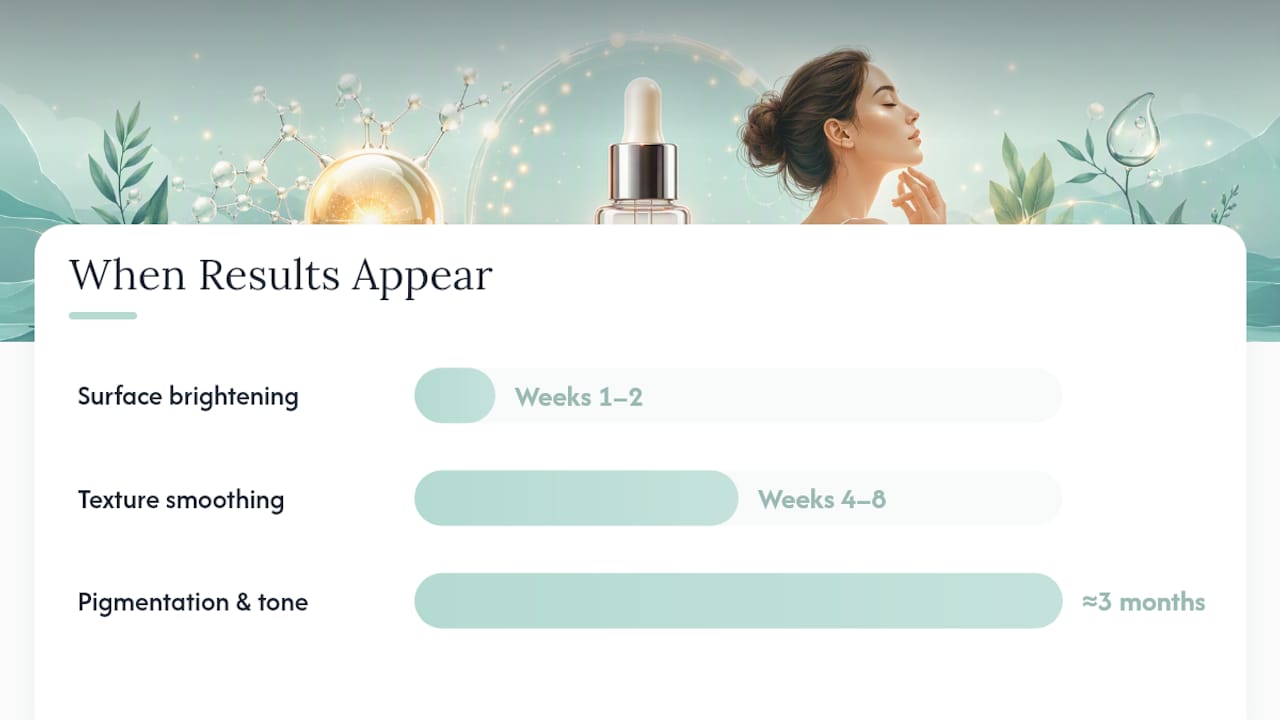
- Weeks 1 to 2: Skin often looks slightly fresher as antioxidant protection kicks in.
- Weeks 4 to 8: Texture starts to smooth out as collagen support builds.
- Around 3 months: Visible improvements in pigmentation and overall tone become noticeable for most consistent users.
Harvard Health Publishing reports that clinical improvements in texture and pigmentation usually require consistent use over several months. Surface brightening tends to show up first, while deeper pigment and collagen-driven changes take longer because they depend on your skin’s natural renewal cycle.
Sun exposure, how deep your pigment sits, and how consistently you apply the serum all affect your timeline. Track progress with photos taken in the same lighting each week. Memory is unreliable, but a side-by-side photo isn’t.
Who Should Be Careful With Vitamin C Serum
Vitamin C is generally well tolerated, but it’s not risk-free for everyone.
- Mild tingling or slight redness right after application is common and usually fades within minutes
- Persistent burning, peeling, or breakouts are signs to stop and reassess your formulation
- Rosacea-prone or highly reactive skin should start with a derivative form rather than pure L-ascorbic acid
- Combining vitamin C with retinoids or strong acids in the same routine can increase irritation, so many people split them between morning and night
- Anyone pregnant, managing a chronic skin condition, or experiencing a reaction that doesn’t resolve should check with a dermatologist before continuing
Why Miamibeachbum’s Approach to Glow Starts With Sun Protection
Glow and sun protection aren’t separate conversations. Dermatologists at Houston Methodist note vitamin C works best as part of a routine, not as a standalone fix, which is exactly how Miamibeachbum builds its educational content and product lineup.
- Guides like why sunscreen prevents dark spots and SPF plus next-level skincare benefits explain how photoprotection and brightening actives work together
- Reef-safe mineral SPF reduces the UV-driven oxidative stress that undoes vitamin C’s brightening work
- Body care formulated with marine and botanical ingredients supports the same antioxidant goals below the neckline
- [Author biographical credentials and expertise related to skincare]
Vitamin C is most effective as one piece of a sun-aware routine, not a substitute for daily SPF.
[Proprietary data or case studies demonstrating product effectiveness]
What the Research Actually Supports (and What Gets Overhyped)
Most vitamin C advice online treats it like a miracle ingredient that works regardless of what else you’re doing. That framing is wrong, and it sets people up to quit early when a $40 serum doesn’t erase three years of sun damage in two weeks.
What the evidence actually supports is narrower and more useful: vitamin C reliably reduces oxidative stress and slows pigment formation, but only when it’s paired consistently with sunscreen and given roughly three months to show its full effect. Skip the SPF, and you’re actively working against the serum every time you step outside.
The overlooked variable is packaging. If I had to pick one habit to prioritize, it wouldn’t be finding the “strongest” formula. It would be committing to consistent morning use, in opaque packaging, under sunscreen, for a full season before judging results.
— Ayssa
Build Your Glow Routine With Miamibeachbum
If vitamin C serum handles the antioxidant and brightening work, the rest of your routine determines whether that work actually shows up as glow. Miamibeachbum designs its reef-safe lineup around exactly that gap.
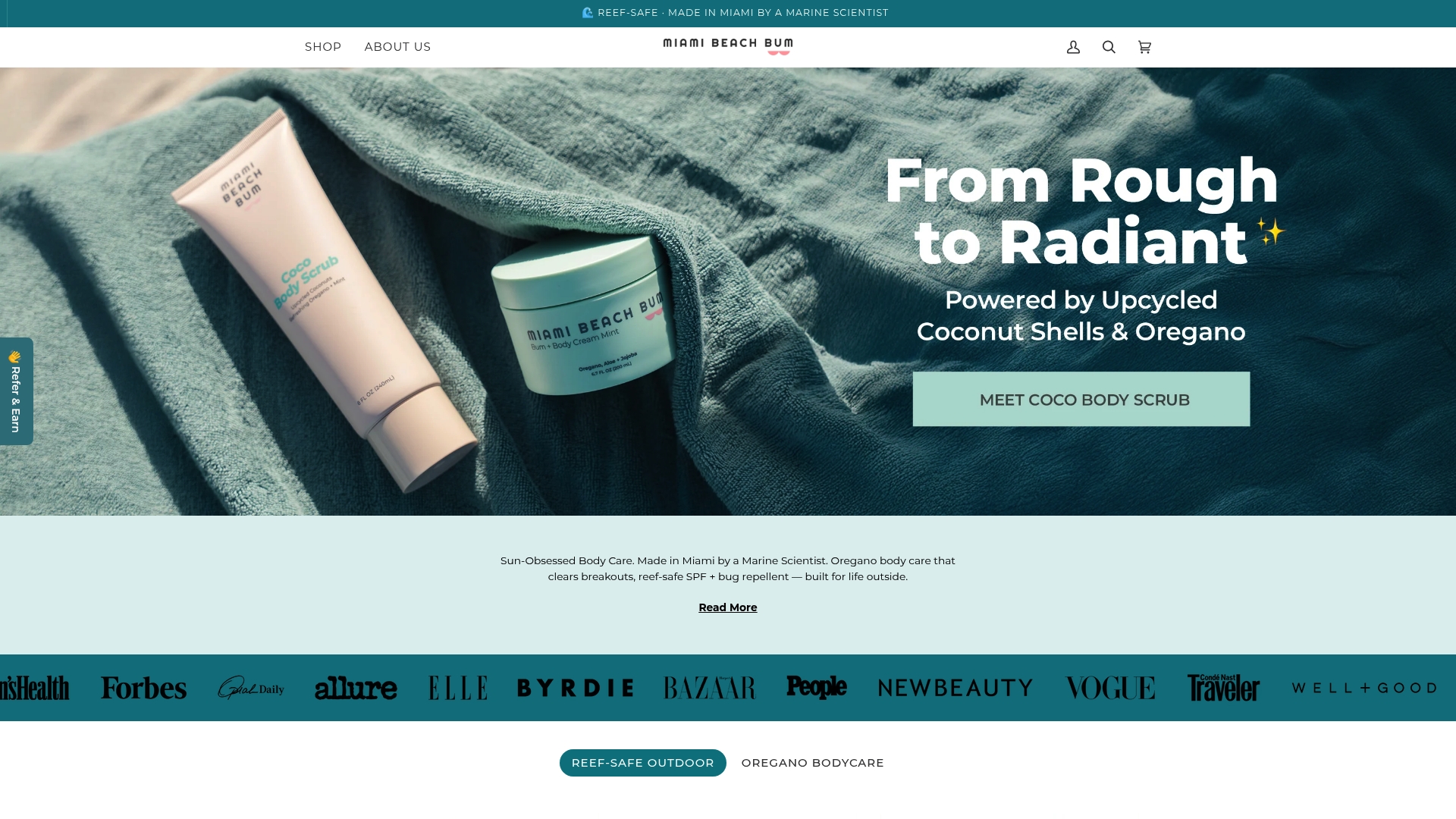
Start mornings with Save Face SPF 50 Sheer Mineral Facial Serum layered over your vitamin C to lock in the photoprotection your serum needs to keep working. For body skin dealing with sun-driven dullness or uneven tone, Blocked SPF50 covers the same principle at scale. Pair either with Coco Body Scrub once or twice a week to clear away dead skin before your actives absorb, and follow up with Bum + Body Cream to calm any redness or breakouts along the way.
None of these replace your vitamin C serum. They protect the investment you’re already making in it. Shop the full Bodycare Discovery Set to build out a complete routine in one order.
Sources
- Vitamin C Serum: Benefits, How to Apply (Cleveland Clinic)
- Vitamin C Serums: Are They Worth the Hype? (Houston Methodist)
- Why is topical vitamin C important for skin health? (Harvard Health Publishing)
- A Guide to the Best Vitamin C Serums for Brighter Skin (Healthline)
- Antioxidants and skin (PMC review)