


A body care routine is a short, repeatable set of daily steps: cleanse, treat, moisturize, and protect. Its primary purpose is barrier support, hydration, and sun damage prevention. Board-certified dermatologists frame it as health maintenance, not vanity. For anyone spending real time in the sun, SPF 30 or higher on exposed skin is the non-optional step.
- Cleanse: Remove salt, sweat, and sunscreen residue
- Treat: Address targeted concerns (acne, razor burn, dry patches)
- Moisturize: Repair and seal the skin barrier
- Protect: Broad-spectrum SPF 30–50 every morning, reapplied at the beach
Miamibeachbum builds every product around this framework, with a beach-first focus on barrier support and practical sun protection.
Table of Contents
- Why does your body skin need a routine?
- How to build your AM and PM body care routine
- What to know about sunscreen and after-sun care at the beach
- How to tailor your routine to your skin type
- A 3-step routine built for beach days
- Which ingredients help, and which ones to avoid in the sun
- When should you see a dermatologist?
- Key Takeaways
- The case for taking beach body care seriously
- Miamibeachbum products built for your beach routine
- Useful sources and further reading
Why does your body skin need a routine?
Dermatologists consistently note that body skin faces dryness, loss of elasticity, pigmentation, and sun damage, yet most people skip it entirely. The hands, chest, and neck show sun damage earlier than other areas because they are chronically exposed and chronically neglected.
The good news: consistency matters more than product count. A simple routine done daily outperforms a complex one done occasionally.
Practical benefits for sun-exposed skin:
- Improved hydration and reduced flaking
- Fewer sunspots and slower visible aging on the chest and hands
- Smoother texture and reduced keratosis pilaris over time
- Lower risk of razor burn and body acne with the right product choices
Pro Tip: Daily SPF on the chest, neck, and hands reduces cumulative photo-damage, the kind that shows up as dark spots and crepey skin years later.
How to build your AM and PM body care routine
AM steps
- Gentle cleanse (if needed): Use a mild, fragrance-free body wash. Skip if skin is not sweaty or dirty.
- Treat targeted areas: Apply a spot treatment or niacinamide serum to body acne or hyperpigmentation zones.
- Lightweight moisturizer: Apply to slightly damp skin immediately after patting dry to lock in hydration.
- Broad-spectrum SPF 30–50: Apply to all exposed areas before going outside.
PM steps
- Lukewarm shower: Keep it to 5–10 minutes and avoid hot water, which strips natural oils.
- Targeted treatments: Retinoids or salicylic acid products go on at night, not before sun exposure.
- Rich moisturizer: Apply while skin is still slightly damp for maximum barrier repair.
| Step | AM | PM |
|---|---|---|
| Cleanse | Gentle wash if needed | Lukewarm shower, 5–10 min |
| Treat | Niacinamide, vitamin C | Retinoids, salicylic acid |
| Moisturize | Lightweight lotion on damp skin | Rich cream on damp skin |
| Protect | SPF 30–50 on exposed areas | None needed |
Dos and don’ts:
- Pat skin dry, do not rub
- Apply moisturizer within a few minutes of stepping out of the shower
- Avoid hot water, it disrupts the skin barrier
- Skip heavily fragranced products right after sun exposure
What to know about sunscreen and after-sun care at the beach
Choosing the right SPF for a beach day comes down to three things: broad-spectrum coverage, SPF 30–50, and a formula you will actually reapply. Mayo Clinic guidance recommends SPF greater than 30 with full UVA/UVB coverage, reapplied every 2–3 hours and immediately after swimming or towel-drying.
Mineral vs. chemical sunscreen:
- Mineral (zinc oxide, titanium dioxide): Sits on the skin surface, less likely to irritate sensitive skin, often preferred for reef-conscious beach use
- Chemical: Absorbs into skin, tends to feel lighter and blend more easily, better for daily wear under clothing
Spray vs. lotion: Lotions give more even, controlled coverage. Sprays are convenient for reapplication but easy to under-apply. Use at least a shot-glass amount for full-body coverage.
Pro Tip: Check for the “white line” method: rub sunscreen in until no white residue remains, then check your shoulders and upper back in a mirror before heading out.
Blocked SPF50 from Miamibeachbum is built for exactly this use case: durable beach-day coverage with barrier-friendly ingredients.
After-sun care:
- Cool the skin with a damp cloth or cool shower first
- Apply a barrier-repair moisturizer with ceramides or glycerin
- Drink water to support internal hydration
- Avoid retinoids, AHAs, and strong actives on sunburned skin until it heals
How to tailor your routine to your skin type
Not every body skin concern needs the same fix. Matching your product textures and ingredients to your skin type makes the routine work faster and with less irritation. For a deeper look at personalized skin care, the approach varies significantly by skin condition and lifestyle.
| Skin Type / Concern | Recommended Texture | Key Ingredients | Notes |
|---|---|---|---|
| Dry / flaky | Rich cream or ointment | Ceramides, glycerin, shea butter | Apply on damp skin twice daily |
| Oily / acne-prone | Lightweight lotion | Niacinamide, salicylic acid | Use non-comedogenic products only |
| Sensitive | Fragrance-free cream | Ceramides, colloidal oatmeal | Patch test new products |
| Keratosis pilaris | Lotion with exfoliant | Urea, lactic acid, glycerin | 1–2x weekly exfoliation max |
| Razor burn | Lightweight gel or cream | Niacinamide, aloe, ceramides | Avoid alcohol-heavy formulas |
Safety notes for sun-exposed skin:
- Retinoids and AHAs increase sun sensitivity. Use them at night only and always follow with SPF the next morning.
- Exfoliate 1–2 times weekly at most. More frequent exfoliation thins the barrier and raises sunburn risk.
- Step up to a heavier cream in dry winter months; a lighter lotion works for summer.
A 3-step routine built for beach days
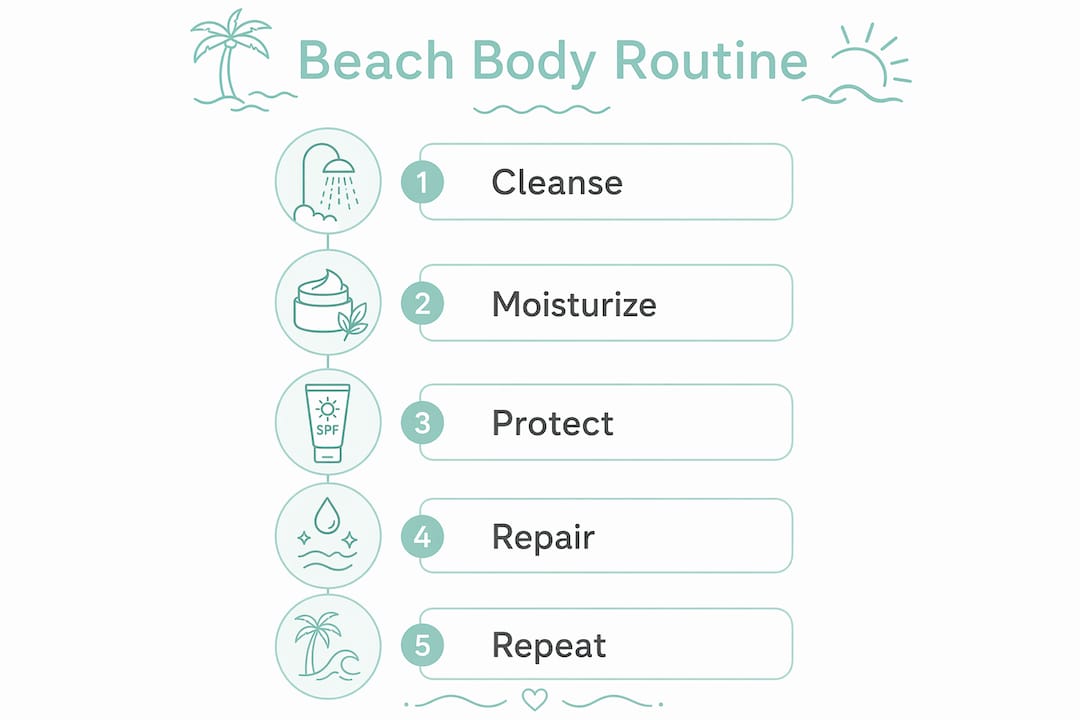
Dermatologists confirm that a three-step routine covers most people’s needs. For beach days, that simplicity is a feature, not a compromise.
- Rinse or cleanse: A quick rinse removes salt and sweat. Use a gentle cleanser only if needed.
- Moisturize on damp skin: Apply a lightweight moisturizer before fully drying off to trap hydration.
- Apply SPF: Broad-spectrum SPF 30–50 on all exposed areas. Reapply every 2 hours and after every swim.
Beach-pack checklist:
- Travel-size broad-spectrum SPF 30–50 (body)
- Lip SPF (SPF 30 minimum)
- Lightweight moisturizer or after-sun gel
- The Bodycare Discovery Set covers all three steps in travel-friendly sizes
When to add extras: Exfoliation or treatment products work best on non-beach days. Save actives for evenings when you are not heading back into the sun the next morning.
Which ingredients help, and which ones to avoid in the sun
Look for these:
- Ceramides: Restore the lipid barrier, reduce water loss
- Glycerin and hyaluronic acid: Draw moisture into the skin
- Niacinamide: Calms redness, reduces pigmentation, supports barrier function
- Zinc oxide / titanium dioxide: Mineral UV filters, stable in sunlight, low irritation risk
- SPF 30–50 broad-spectrum: The minimum for meaningful daily protection
Use cautiously or avoid:
- Fragrances: Common irritants, especially on sun-exposed or post-sun skin
- High-strength retinoids or AHAs right after heavy sun exposure: These increase photosensitivity. Phase retinoids in slowly on body skin, starting 2–3 nights per week.
- Alcohol-heavy formulas: Strip the barrier and worsen dryness after sun exposure
For moisturizer ingredient guidance, Miamibeachbum breaks down what to prioritize by skin need.
Saltwater and chlorine note: Both strip natural oils faster than freshwater. After ocean or pool exposure, rinse thoroughly and apply a ceramide-rich moisturizer before skin fully dries.
When should you see a dermatologist?
Most body skin concerns respond to consistent OTC care within 4–8 weeks. Some do not, and those warrant a professional visit.
See a dermatologist promptly for:
- Blistering or severely peeling sunburn that covers a large area
- Suspicious moles or lesions that are new, changing in shape or color, or bleeding
- Body acne that does not improve after 6–8 weeks of consistent salicylic acid or benzoyl peroxide use
- Infected or severely inflamed razor burn
Annual skin checks: Anyone with frequent, high-intensity sun exposure should schedule a full-body skin exam once a year. Cedars-Sinai dermatologists identify sun protection and early detection as the two most effective tools for reducing skin cancer risk.
This article is general information, not medical advice. For persistent or concerning skin issues, consult a board-certified dermatologist.
Key Takeaways
A consistent body care routine built around barrier support and daily SPF is the most effective approach to maintaining healthy skin for sun-exposed lifestyles.
| Point | Details |
|---|---|
| Barrier support is the goal | Cleanse, moisturize on damp skin, and protect daily to maintain the skin barrier. |
| SPF 30–50 is non-negotiable | Apply broad-spectrum sunscreen every morning and reapply every 2 hours at the beach. |
| Consistency beats complexity | A simple 3-step routine done daily outperforms a 10-step routine done occasionally. |
| Match products to skin type | Use ceramides for dry skin, niacinamide for acne-prone, and fragrance-free formulas for sensitive skin. |
| Miamibeachbum for beach days | Blocked SPF50, Bum + Body Cream, and the Bodycare Discovery Set map directly to these routine steps. |
The case for taking beach body care seriously
Most body care advice treats sun protection as an afterthought, something you add after the “real” skincare steps. That framing is backwards. For anyone who spends meaningful time outdoors, SPF is the routine. Everything else supports it.
The conventional wisdom says to build a complex multi-step system and work up to it gradually. What actually works is simpler: pick three products you will use every single day, make sure one of them is a broad-spectrum SPF, and apply your moisturizer before your skin fully dries. That combination, done consistently, does more for long-term skin health than any elaborate regimen used sporadically.
The other thing most guides understate is the importance of after-sun repair. Sunscreen prevents damage; ceramide-rich moisturizer after sun exposure helps the barrier recover from what sunscreen did not catch. Both matter. Treating them as separate concerns, one for “protection days” and one for “damage days,” misses how they work together.
Miamibeachbum’s marine scientist founder built the brand around exactly this reality: beach skin needs products designed for real sun exposure, not products adapted from a general skincare line. That specificity shows up in formulation choices and in how the products are meant to be used together.
Miamibeachbum products built for your beach routine
Sun-obsessed skin deserves products designed for actual beach conditions, not reformulated general-purpose creams.
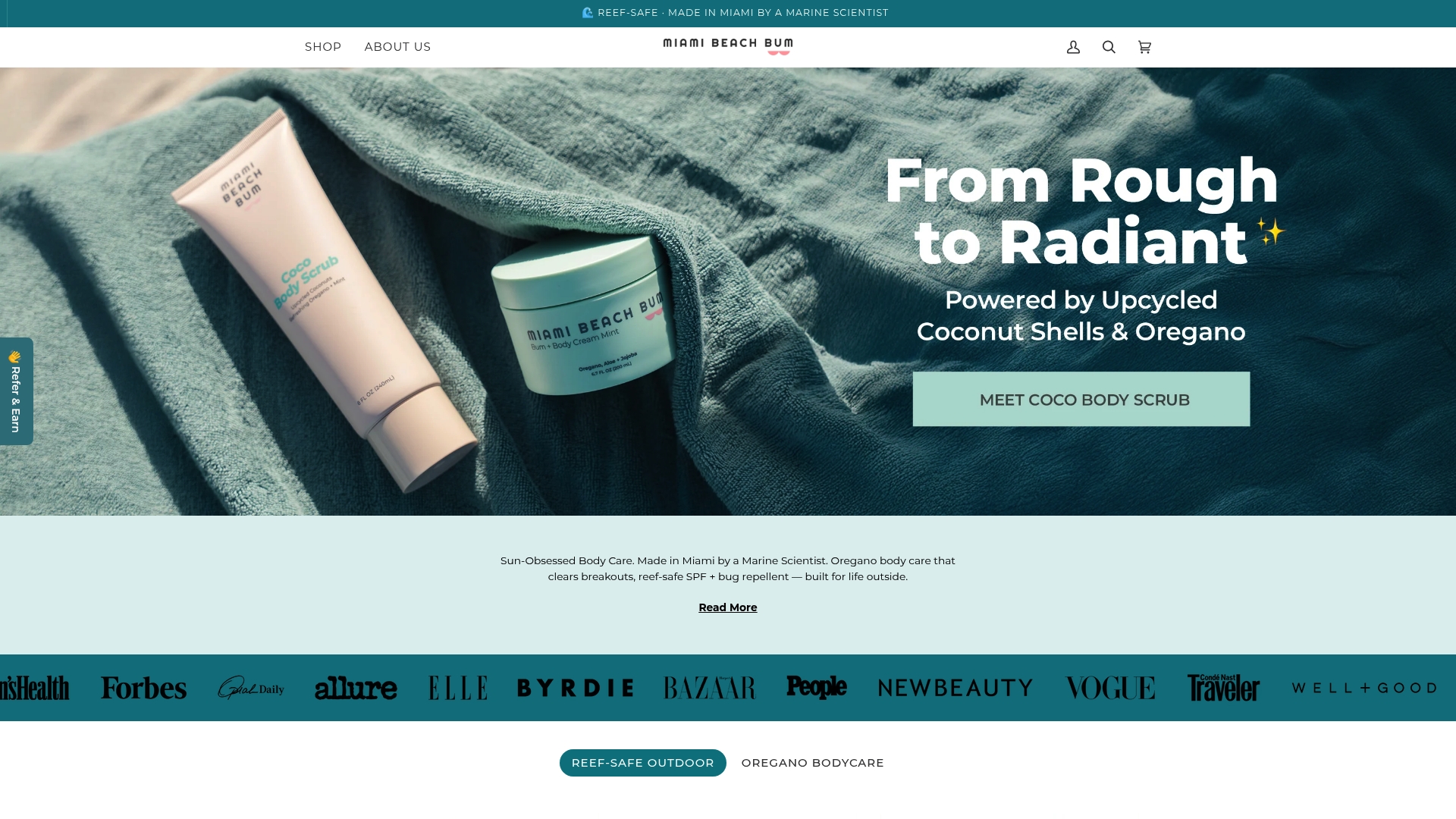
Blocked SPF50 is Miamibeachbum’s answer to the daily beach SPF problem: broad-spectrum coverage in a formula built to hold up through heat and humidity. Apply it as the final AM step on all exposed areas. Bum + Body Cream handles the post-sun and treatment side, with barrier-repair ingredients that work for razor burn and body acne. Beauty editors have covered it specifically for those use cases. For travel or first-timers, the Bodycare Discovery Set puts the core routine in one kit. Browse the full range at Miamibeachbum and find the products that fit your routine.
Useful sources and further reading
The claims in this article draw on clinical guidance and editorial sources. The following links go deeper on each topic:
- Skin care: 5 tips for healthy skin — Mayo Clinic: SPF guidance and reapplication rules
- Skin care basics and tips — Cleveland Clinic: shower length, moisturizing technique
- How to build a body skincare routine — Marie Claire / board-certified dermatologists: barrier-first framing
- Body care routine for every skin type — The Established: skin-type tailoring and exfoliation guidance
- How to do body care right at every age — CNA Lifestyle: dermatologist-backed minimalist routine and neglected body zones
- How to build a body care routine — Byrdie: damp-skin moisturizing technique
- How to take care of your skin — Cedars-Sinai: sun protection and annual skin checks
- Miamibeachbum: Our Story — Brand background and founder credentials
- 5 reasons beauty editors love Bum + Body Cream — Editorial coverage and product use cases