


Spray sunscreens carry real inhalation and coverage risks, but they are not banned or universally dangerous. Lotions and mineral sticks remain the lower-risk default, especially for kids and anyone with asthma. If you do reach for a spray, spray into your hand and rub it in rather than misting your skin directly, check for recalls first, and never spray near an open flame. The biggest hazards, in order, are inhaled particles, benzene contamination in specific recalled batches, and flammability.
TL;DR:
- Using spray sunscreen increases inhalation risks and the chance of underapplication, which can significantly reduce effective SPF coverage.
- Contaminants like benzene have been found in specific recalled batches, so checking lot numbers before use is essential to avoid health hazards.
- Applying spray sunscreen into the hand and rubbing it in effectively minimizes inhalation and improves coverage, especially in windy or crowded environments.
- Spray formulations are not recommended for the face, children, or in windy conditions due to higher inhalation and eye contact risks.
- Mineral lotions with zinc oxide or titanium dioxide offer safer, non-aerosol alternatives with fewer health and environmental concerns.
Table of Contents
- Spray Sunscreen Safety Risks: Inhalation, Coverage, and Irritation
- Ingredients and Contamination: What to Check on the Label
- How Do You Apply Spray Sunscreen Safely?
- When Should You Skip the Spray Entirely?
- What Do the FDA and EWG Actually Say About Spray Sunscreen?
- Miami Beach Bum’s Take on Getting Spray Application Right
- Quick Checklist Before You Buy or Apply
- Does Spray Sunscreen Interact With Other Skincare Products?
- How Should You Store and Dispose of Spray Sunscreen?
- Balancing Sun Protection With Spray-Specific Risks
- A Mineral Lotion Option Built Around These Same Priorities
- Sources
- FAQ
Spray Sunscreen Safety Risks: Inhalation, Coverage, and Irritation
The core problem with aerosol sunscreen isn’t the sunscreen itself. It’s what happens when you mist it into open air a foot from your face. Spray products can generate droplets with an aerodynamic diameter of 5 micrometers or smaller, which is small enough to bypass your upper airway defenses and settle deep in your lungs. That’s not a theoretical concern. It’s basic particle physics, the same reason wildfire smoke and fine dust are considered more dangerous than coarser particles.
For most healthy adults, an occasional stray whiff causes mild throat irritation at worst. But pulmonology specialists specifically advise people with asthma or other respiratory disease to avoid aerosol sunscreens altogether, since inhaled mist can trigger coughing spells or bronchospasm. Kids are a second at-risk group, both because their airways are smaller and because they’re often standing right next to the person doing the spraying.
Statistic Callout: A droplet needs to measure roughly 5 micrometers or fewer to reach deep lung tissue. That’s about one-fourteenth the width of a human hair, small enough that you’d never see or feel it landing.
There’s a second, quieter risk that has nothing to do with breathing: underapplication. Dermatology researchers have found that people routinely under-apply spray sunscreen, waving the can over their skin for a second or two instead of building an even, visible layer. That habit alone can cut your effective SPF far below what’s printed on the bottle.
A few risk factors compound quickly once you add wind or flame into the mix:
- Windy beaches and boat decks disperse spray before it lands, wasting product and increasing what you inhale.
- Standing too far from your skin (more than a few inches) thins the mist and worsens coverage.
- Applying near a grill, campfire, or lit cigarette risks flammable aerosol propellant igniting.
- Spraying directly onto a child’s face increases both inhalation exposure and eye contact risk.
Ingredients and Contamination: What to Check on the Label
Not every spray sunscreen carries the same ingredient risk, and the differences matter more than the marketing suggests. The most serious recent concern isn’t a sunscreen filter at all. It’s benzene, a contaminant that has shown up in specific aerosol lots due to manufacturing issues, not the sunscreen formula itself. Johnson & Johnson Consumer Inc. voluntarily recalled specific Neutrogena and Aveeno aerosol products after benzene was detected in some samples. If you own an older can from an affected lot, stop using it and check the lot number against the manufacturer’s recall notice.
Beyond that specific contamination event, some chemical UV filters (oxybenzone and avobenzone among them) remain under ongoing study for systemic absorption. That doesn’t mean they’re proven harmful. It means the evidence is still developing, and regulators haven’t concluded they’re unsafe at typical use levels.
Mineral filters have a cleaner track record. Zinc oxide shows limited evidence of systemic absorption compared with several chemical filters and provides broad-spectrum coverage, which is why it’s consistently the top recommendation among ingredient-focused reviewers. If you’re deciding between a chemical and mineral formula, zinc oxide is the safer default when you have sensitive skin, young kids, or simply want the most conservative option available.
A few label checks worth making every time:
- Confirm the lot number isn’t on an active recall list before using an older can.
- Skip “fragrance” on the ingredient list if you have sensitive or reactive skin.
- Look for flammability warnings printed on the can, not just the SPF number.
- Favor zinc oxide or titanium dioxide as the active ingredient when inhalation or absorption is a concern.
How Do You Apply Spray Sunscreen Safely?
The single biggest fix for spray sunscreen risk costs you nothing and takes five extra seconds: spray it into your hand first, then rub it onto your skin like lotion. Clinicians specifically recommend this cupped-hand technique because it eliminates the airborne mist entirely while still letting you use the product you already bought.
If you prefer to spray directly onto skin, follow these steps:
- Move to a spot with little to no wind, ideally indoors or in a sheltered area.
- Hold the canister about 1 inch from your skin, not farther.
- Spray in slow, deliberate passes, covering each section two to three times.
- Immediately rub the product in by hand to spread it evenly and fill in thin spots.
- Reapply every two hours, or immediately after swimming or heavy sweating.
Holding the can too far away is the most common mistake, since it scatters the product into the air instead of onto your skin, wasting sunscreen and increasing what you breathe in.
Pro Tip: If you’re reapplying spray sunscreen over makeup at the beach, spray into your palm first and pat it on in sections rather than misting your whole face. It preserves your makeup and keeps you from inhaling anything. Miami Beach Bum has a full 6-step routine for reapplying over makeup if you want the complete breakdown, along with a simple 6-seconds-per-limb rule for making sure you’re using enough product to hit your labeled SPF.
Never spray sunscreen near a grill, fire pit, or lit flame. Pediatric guidance is specific on this point too: spray sunscreen away from other people, especially kids, and choose a non-aerosol format for children and anyone with lung disease whenever you can.
When Should You Skip the Spray Entirely?
Some situations call for lotion or stick sunscreen without exception. Your face is one of them. The FDA specifically advises against spraying sunscreen directly onto the face because of both inhalation risk and the odds of getting product in your eyes. Crowded beaches and windy conditions are two more, since a fine mist doesn’t stay contained to the person using it.
Situations where lotion or stick makes more sense than spray:
- Applying to your face or the delicate skin around your eyes.
- Sunscreening a child, regardless of the setting.
- Standing in a crowd, on a packed beach, or anywhere wind carries mist toward other people.
- Anyone in the household has asthma or another respiratory condition.
Spray still has a legitimate place. It’s genuinely useful for hard-to-reach spots like your upper back, or for a fast reapplication mid-run or mid-surf session when you don’t want to stop and rub in lotion. Just apply it into your hand first in those cases too, when you can manage it.
On ingredients, zinc oxide is the strongest first choice given its safety profile, with titanium dioxide as a solid second option. And regardless of format, the research is consistent on one point: consistent, adequate application matters more for your actual sun protection than chasing an SPF 70 label you only apply once.
What Do the FDA and EWG Actually Say About Spray Sunscreen?
Two organizations set the tone for most sunscreen safety guidance in the U.S., and their positions overlap more than they conflict. The FDA’s guidance is direct: don’t spray sunscreen onto your face, follow label directions, and check for flammability warnings since some aerosol propellants are combustible. Aerosol cans are also legally required to carry flammability labeling, so that warning on the can isn’t boilerplate.
EWG’s independent sunscreen guide takes a similar stance from a consumer-advocacy angle, flagging inhalation risk and uneven coverage as its main objections to spray formats and recommending lotions or sticks with mineral filters when practical.
If you want to verify a product’s current status, a few resources cover the bases:
- The FDA’s recall and safety alert page lists active sunscreen recalls by brand and lot number.
- EWG’s annual guide rates individual products on ingredient safety and coverage reliability.
- Manufacturer websites typically post lot-specific recall lookup tools for affected products.
Miami Beach Bum’s Take on Getting Spray Application Right
Sun protection only works if you actually use enough of it, in the right order, on the right schedule. That’s the piece most safety guides skip. Miami Beach Bum’s application posts focus on the mechanics: how long to spend per limb, how to layer sunscreen with body lotion without diluting either product, and why sunscreen goes on before bug spray, not after.
That sequencing matters more than people realize. Waiting 10 to 15 minutes between sunscreen and bug spray keeps the two products from interfering with each other’s coverage. The same logic applies to hair. If you’re spending a full day outside, sun exposure affects your scalp and strands just as much as your skin, and a salon-level approach to sun protection for hair is worth factoring into your routine, not just an afterthought.
Quick Checklist Before You Buy or Apply
Run through this list before your next beach trip:
- Choose a non-aerosol mineral formula when your situation allows it.
- Check the can for a flammability warning before packing it near a grill or fire pit.
- Skip “fragrance” on the label if your skin reacts easily.
- Confirm the lot number isn’t on an active recall list.
- Apply into your hand and rub it in, rather than misting skin directly.
Statistic Callout: Droplets around 5 micrometers can reach deep into your lungs, which is the exact size range some aerosol sunscreens produce mid-spray.
Traveling with aerosol cans adds another wrinkle: TSA and airline rules on aerosols vary, so if you’re flying, check the specific rules for aerosol sunscreen on planes before you pack it in a carry-on. The one-line takeaway across every section here is the same: correct, consistent application beats any single product choice.
Does Spray Sunscreen Interact With Other Skincare Products?
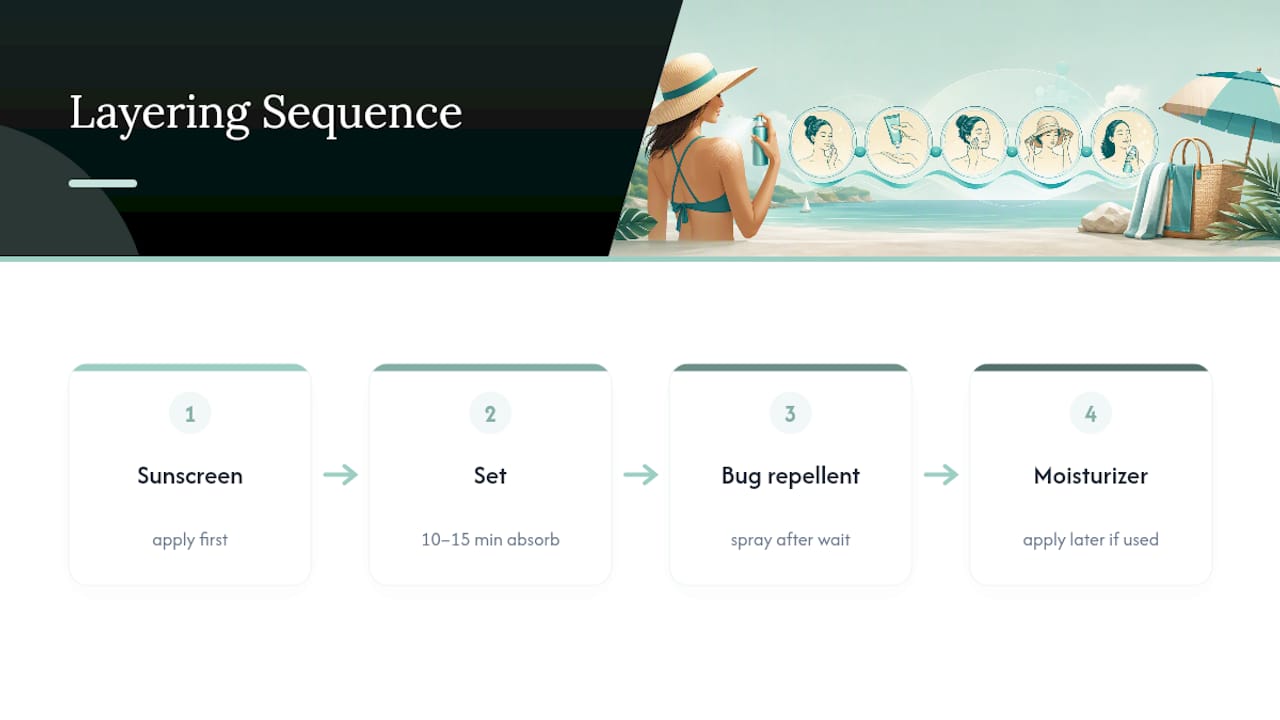
Layering order changes how well any sunscreen performs, and spray formats are more sensitive to it than lotions because there’s less product mass to work with. Applying spray sunscreen over a fresh layer of body lotion or oil can dilute it, causing the spray to bead up or slide rather than form an even film. The safer order is sunscreen first, moisturizer second, unless you’re using a specific layering method.
Bug repellent is the product people get wrong most often. Sunscreen needs to bond with your skin before you add anything on top of it, which is why applying repellent immediately after sunscreen can thin out your UV protection before it’s fully set. Giving sunscreen roughly 10 to 15 minutes to absorb before spraying on repellent preserves both products’ effectiveness.
Makeup complicates things further, especially with mineral formulas. Zinc oxide can sit on top of foundation rather than blending into it, which is why reapplying spray sunscreen midday over makeup calls for a lighter touch: spray into your palm and press it on in sections instead of misting your whole face and smearing your makeup in the process.
If you use retinoids or exfoliating acids in your routine, apply those at night and keep your daytime routine focused on sunscreen and basic hydration. Piling active ingredients under sunscreen increases the odds of irritation, particularly with chemical UV filters, and doesn’t improve your sun protection at all.
How Should You Store and Dispose of Spray Sunscreen?
Heat is the biggest threat to a can of spray sunscreen, both for its effectiveness and its safety. Aerosol cans are pressurized, and leaving one in a hot car, on a sun-baked pool deck, or near a beach fire pit raises internal pressure and increases the risk of an aerosol propellant igniting or the can rupturing. Store cans in a cool, shaded bag, not your beach tote’s exterior pocket sitting in direct sun.
Sunscreen doesn’t last forever once opened, either. Most formulas carry an expiration date printed on the bottom of the can or bottle, typically two to three years from manufacture. Past that date, the active ingredients degrade and the product no longer delivers its labeled SPF, so check that date before you toss an old can in your beach bag for the season.
When it’s time to get rid of an empty or expired can, don’t puncture it or throw it in a fire, even after it seems empty. Most municipal recycling programs accept empty aerosol cans in curbside bins, but check local guidelines first since some require the cap removed. If a can is under an active recall, follow the manufacturer’s specific disposal and return instructions rather than tossing it in regular trash.
Beyond your own storage habits, aerosol propellants and rinse-off sunscreen residue can affect marine environments when used heavily around reefs and coastlines, which is part of why mineral, non-aerosol formulas have become the more environmentally conscious default among ocean-focused brands.
Balancing Sun Protection With Spray-Specific Risks
Skin cancer risk from UV exposure is not in question, and skipping sunscreen entirely is a far bigger gamble than any of the risks covered here. My stance after digging through the inhalation research and recall history is straightforward: pick a lower-risk format when you reasonably can, and treat sprays as a tool that requires a bit more care, not a product to fear. Kids and anyone with respiratory disease should skip aerosol formats altogether. If you want to see how a mineral lotion fits into that approach, our product page has the specifics.
— Ayssa
A Mineral Lotion Option Built Around These Same Priorities
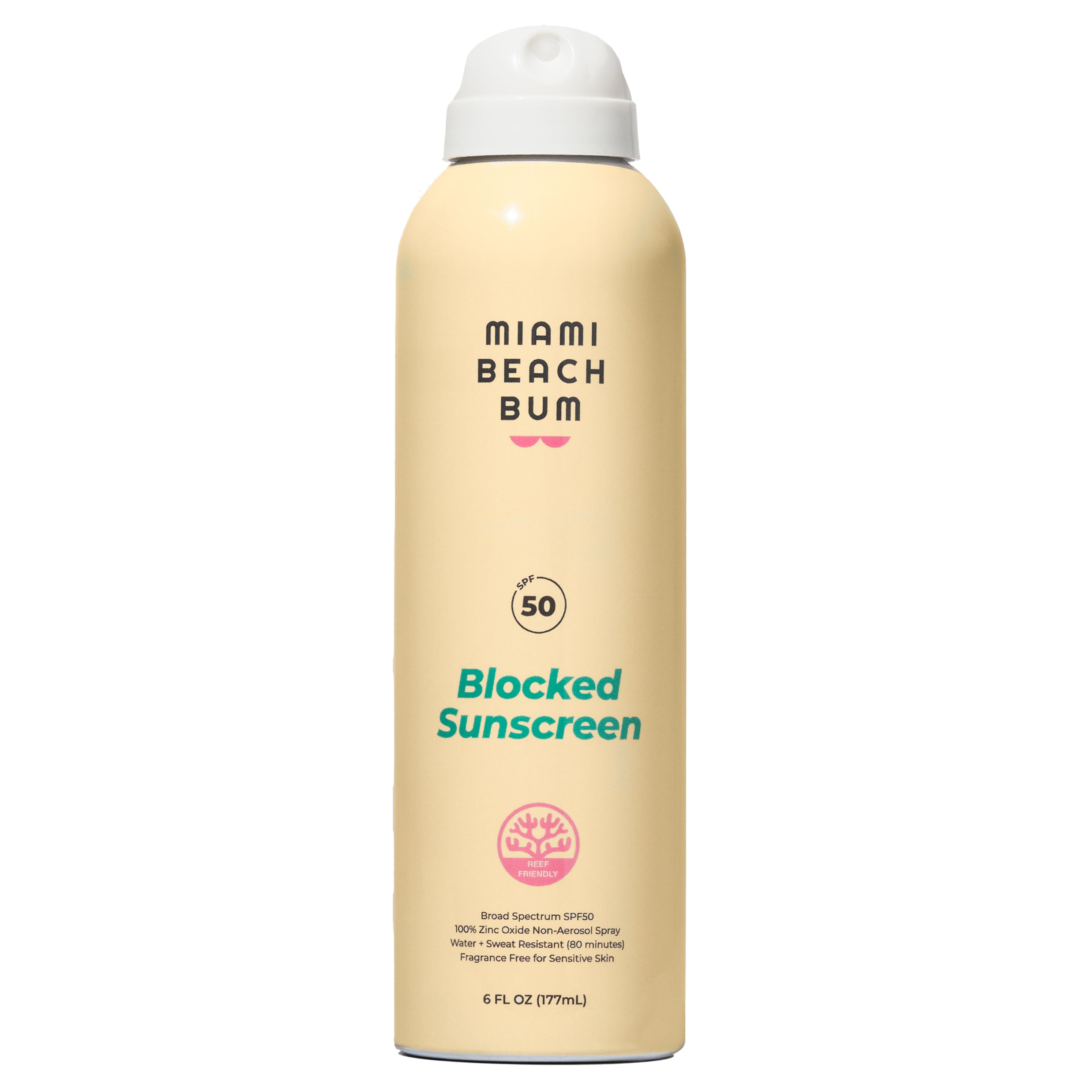
If everything above has you leaning toward lotion over spray, Blocked SPF50 gives you a non-aerosol mineral formula without asking you to hunt through ingredient lists to check for what’s missing. It skips the aerosol propellant entirely, which means no flammability warning to check, no inhalation risk to manage, and no guesswork about whether you’re covering your skin evenly since you can see exactly where you’ve applied it. That’s the same safety logic covered throughout this guide: mineral filters, non-aerosol delivery, and application you can actually control by hand. If a lotion format fits your routine better than a mist, visit the Blocked SPF50 product page to check the full ingredient list and pick up a bottle for your next beach day.
Sources
- Aerosol generation and inhalation exposure from spray sunscreens (PubMed)
- Review: sunscreen safety and ingredient evidence (PMC review)
- Manufacturer voluntary recall notice (FDA summary of JJCI aerosol sunscreen recall)
FAQ
What Is the Least Toxic Spray Sunscreen?
Formulas using zinc oxide as the active ingredient carry the most reassuring safety profile among current sunscreen filters, with limited evidence of systemic absorption compared to several chemical alternatives. Titanium dioxide is a reasonable second choice if zinc oxide isn’t available.
Which Sunscreen Should You Avoid?
Avoid any aerosol product currently listed on an active FDA recall due to benzene contamination, and check your can’s lot number against the manufacturer’s recall list before use.
What Is the Biggest Mistake People Make With Spray Sunscreen?
Spraying from too far away and not rubbing it in afterward. This produces thin, uneven coverage that falls short of the labeled SPF and increases how much mist you inhale in the process.
What Are the Downsides of Using Spray Sunscreen?
The main downsides are inhalation risk from fine aerosol particles, a higher chance of underapplication compared to lotion, and flammability if used near open flame. Mineral lotions like Blocked SPF50 avoid all three concerns by skipping the aerosol format entirely.
Is Spray Sunscreen Safe for Kids?
Pediatric guidance recommends avoiding spray formats for children and using non-aerosol sunscreen instead, since kids have smaller airways and are often standing close to whoever is applying the spray.