


Self-tanners are largely replacing tanning beds because they deliver a bronzed look without exposing skin to the UV doses that cause cancer and premature aging. Indoor tanning before age 35 raises melanoma risk by roughly 75%, and the World Health Organization’s cancer research arm classifies UV tanning devices as Group 1 carcinogens, the same tier as tobacco. Self-tanners work through a topical color reaction on the skin’s surface, not radiation, which is why dermatologists increasingly point health-conscious people toward them. That said, a self-tan is not sunscreen.
Why the shift makes sense:
- Zero UV exposure means no added melanoma or carcinoma risk from the product itself.
- No photoaging, no eye damage from UV lamps, no cumulative skin injury.
- Trade-off: self-tanners still require SPF underneath, and some people react to the active ingredient.
Key Takeaways
Self-tanners reduce cancer, aging, and eye-damage risks tied to UV tanning beds while still requiring separate sun protection outdoors.
| Point | Details |
|---|---|
| UV risk gap is massive | Tanning beds raise melanoma risk by about 75% before age 35, while self-tanners carry zero UV exposure. |
| DHA works on the surface | Self-tanner color comes from a chemical reaction in dead skin cells, fading naturally within 5 to 7 days. |
| Prep matters more than product | Exfoliating 2 to 3 days ahead and patch testing 24 to 48 hours ahead prevents streaking and reactions. |
| SPF is still mandatory | Self-tanner provides no UV protection, so daily sunscreen use remains necessary regardless of tan color. |
| Miamibeachbum supports the full routine | Coco Body Scrub, Bum + Body Cream, Blocked SPF50, and Hair Shield cover prep, maintenance, and post-tan sun protection. |
This article is general information, not a substitute for advice from a qualified doctor. Consult a qualified healthcare professional about your own circumstances before acting on anything here.
Table of Contents
- Why Self-Tanner Is Replacing Tanning Beds: The Health Case
- How Does Self-Tanner Actually Work?
- Are Self-Tanner Ingredients Safe to Use?
- How Do You Apply Self-Tanner Without Streaks?
- Is a Base Tan or Spray Tan Actually Safe?
- What Do Health Experts Say About Sunless Tanning?
- Which Option Costs the Planet Less: Tanning Beds or Self-Tanner?
- Is Self-Tanner Cheaper Than Tanning Bed Memberships?
- What Health-Conscious Tanners Should Actually Prioritize
- Building a Safer Tanning Routine With Miamibeachbum
- Sources
Why Self-Tanner Is Replacing Tanning Beds: The Health Case
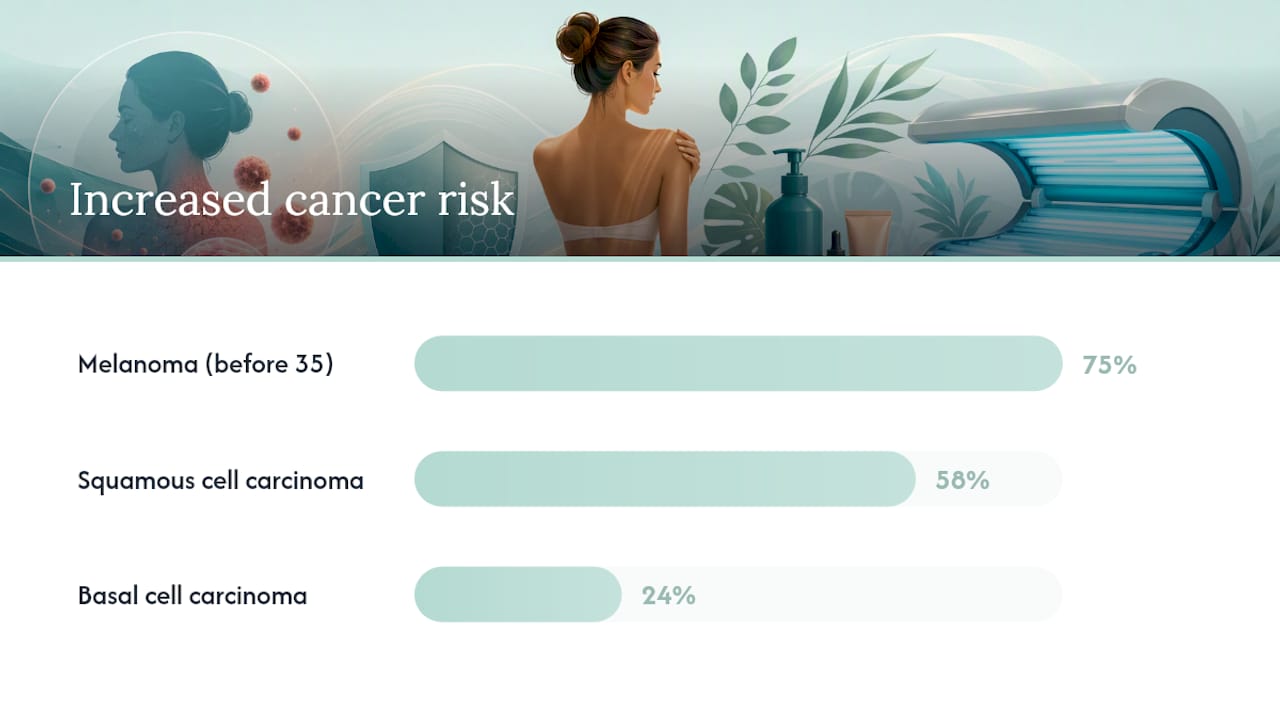
The case comes down to risk math, and the numbers are not close. Tanning bed use before age 35 is linked to about a 75% jump in melanoma risk, along with a 24% increase in basal cell carcinoma and a 58% increase in squamous cell carcinoma. Tanning devices can emit UV radiation 10 to 15 times stronger than midday sun, concentrated in a bed you lie in for 15 or 20 minutes at a stretch. That is not a controlled dose. It is a UV overload, and the IARC has classified these devices as carcinogenic to humans since 2009.
The damage does not stop at cancer risk. Cleveland Clinic is blunt about it: there is no safe tanning bed visit. High UVA concentrations accelerate collagen breakdown, which shows up years later as premature wrinkling and leathery texture. UV exposure from beds also damages the eyes, even through closed lids, raising the risk of cataracts and other long-term issues when goggles are skipped or fit poorly.
Self-tanners carry a different, much smaller risk profile. The main downsides are cosmetic and occasionally dermatological.
- Contact dermatitis or irritation in people with sensitive skin or fragrance sensitivities.
- Uneven color if application is rushed or skin prep is skipped.
- No UV protection whatsoever, meaning sunscreen is still mandatory outdoors.
One statistic sums up the gap well: a tanning bed session can deliver UV intensity 10 to 15 times higher than natural sunlight, while a self-tanner delivers zero UV exposure by design. That is the entire risk-reduction argument in one comparison. Switching does not eliminate every skin concern, but it removes the single largest controllable cancer risk factor tied to cosmetic tanning.
How Does Self-Tanner Actually Work?
Self-tanners rely on a compound called dihydroxyacetone, or DHA, a simple sugar that reacts with amino acids in the outermost layer of skin. That reaction produces melanoidins, brown pigment compounds that sit in the dead skin cells of the stratum corneum. No UV, no melanin production, no DNA-level change. Just a surface chemical reaction that mimics the look of a tan.
Because DHA only affects the outer skin layer, the color fades as those cells naturally shed, typically over 5 to 7 days. That is also why exfoliation before application matters so much and why a tan disappears faster on areas that see more friction, like palms and feet.
Product formats vary quite a bit:
- Lotions and creams offer the most control and are easiest for beginners to apply evenly.
- Foams dry faster and show color as you rub them in, which helps prevent missed spots.
- Professional spray tans cover the body quickly but come with inhalation risk if you breathe during application.
Consumer Reports testing found that modern formulations largely avoid the orange-tinted results older self-tanners were known for, though longevity and scent still vary by brand. Skip oral tanning pills, injectable tanning agents, and nasal tanning sprays entirely. None are approved for that use, and several carry real safety warnings.
Are Self-Tanner Ingredients Safe to Use?
DHA has a strong safety record for topical use, but the fine print matters more than most people realize. The FDA has approved DHA for external cosmetic application, not for inhalation or contact with mucous membranes like the eyes, nose, or mouth. That distinction is why spray tans carry specific precautions that lotions don’t.
Follow these steps before committing to a full-body application:
- Apply a small amount of the product to your inner forearm or behind your ear.
- Wait 24 to 48 hours and watch for redness, itching, or bumps.
- Skip the product entirely if you have active eczema, open cuts, or a flare-up in progress, since broken skin absorbs ingredients differently.
- Choose fragrance-free formulas if you have a history of contact dermatitis. Dermatology guidance on allergic contact dermatitis points to simpler ingredient lists as lower risk for reactive skin, a principle echoed in this breakdown of fragrance-free skincare for sensitive skin.
If you’re getting a spray tan, hold your breath during the actual spray passes, wear the nose filters most studios provide, and close your eyes tightly. These aren’t optional suggestions. They directly address the inhalation gap in DHA’s approval.
Pro Tip: If you’re pregnant or have a chronic skin condition, check in with a dermatologist before your first self-tan. Hormonal skin changes during pregnancy can shift how your skin reacts to DHA, and this guide on self-tanner during pregnancy walks through the specifics.
See a dermatologist if you notice a rash that spreads beyond the application area, blistering, or irritation that doesn’t clear up within a few days.
How Do You Apply Self-Tanner Without Streaks?
Getting an even, natural-looking result depends far more on prep work than on which bottle you buy. Here’s the sequence that actually holds up:
- Exfoliate 2 to 3 days before applying, focusing on elbows, knees, and ankles where dead skin builds up. The Coco Body Scrub works well here since it clears buildup without stripping skin raw.
- Shave or wax at least 24 hours ahead, never right before application, since fresh razor irritation grabs pigment unevenly.
- Moisturize dry patches only an hour before applying, and skip a full-body lotion layer that could dilute the product.
- Apply with a tanning mitt in thin, circular layers, working from ankles upward, and go lighter over knees, elbows, and hands.
- Blend wrists and ankles with a barely-there amount to avoid the tell-tale dark ring effect.
- For your face, mix a small amount of self-tanner into your regular moisturizer rather than applying it straight, since facial skin absorbs pigment faster than the body.
Once you’ve built color, extend it by moisturizing daily with something that won’t strip pigment. A body cream that hydrates without heavy oils, like the Bum + Body Cream, helps maintain even tone as skin naturally sheds.
Pro Tip: First time using a self-tanner? Start with a gradual-build formula and patch-test 48 hours ahead. Building color over three or four light applications beats trying to nail a deep tan in one shot.
Is a Base Tan or Spray Tan Actually Safe?
A base tan doesn’t work the way most people think. Dermatologists and Harvard Health researchers point out that a tan is your skin’s visible response to DNA damage, not a protective layer. The SPF equivalent of a base tan tops out around 2 to 3, nowhere near the SPF 30 or higher dermatologists recommend daily.
- Myth: Tanning beds are safer than the sun because they’re “controlled.” Fact: Beds often deliver far higher UVA doses than natural sunlight, and the IARC lists them as carcinogenic.
- Myth: Self-tanner gives you some built-in sun protection. Fact: DHA offers zero UV protection. Sunscreen is still required every time you’re outdoors.
- Myth: Tanning pills or nasal sprays are a shortcut. Fact: These products are unapproved or flagged as unsafe by regulators and cancer researchers, with some injectable versions linked to serious side effects.
What Do Health Experts Say About Sunless Tanning?
Medical consensus on this topic isn’t split. The IARC classification of UV tanning devices as carcinogenic, combined with dermatology guidance from institutions like the American Academy of Dermatology, points squarely toward avoiding UV tanning altogether and choosing topical alternatives instead.
Sunless tanners provide a bronzed appearance without UV exposure, but they offer no protection from sun damage. Sunscreen and sun-safe habits remain necessary regardless of skin tone achieved through self-tanning.
Miamibeachbum’s content library builds on that guidance with practical resources written for real routines, not clinical checklists:
- A breakdown of why tanning trends keep coming back despite the known risks.
- A deeper look at skin prep before tanning for more even, longer-lasting results.
Ayssa’s editorial work at Miamibeachbum focuses on translating dermatology-backed research into routines people can actually stick to on a Tuesday night before the beach on Saturday. The bottom line stays consistent across every resource: self-tanner is a genuinely safer cosmetic choice, but it never replaces SPF.
Which Option Costs the Planet Less: Tanning Beds or Self-Tanner?
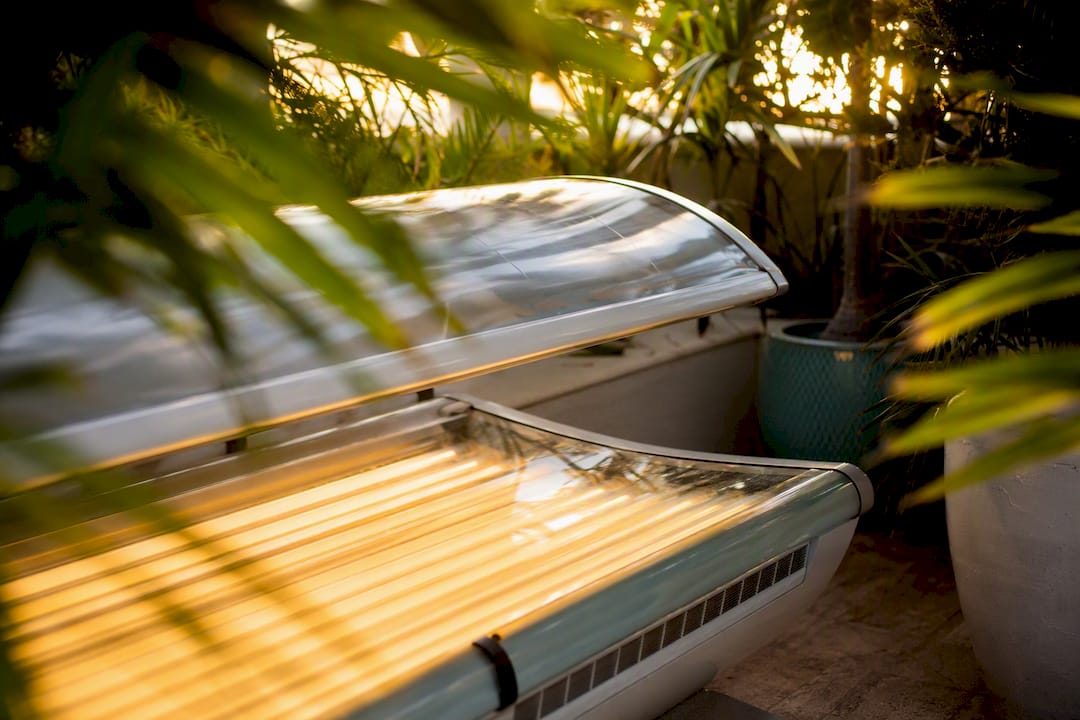
Tanning beds run on electricity, continuously, for every session across every salon. A single bed uses a bank of fluorescent or UV bulbs that draw meaningful power each time someone lies down for 15 to 20 minutes, and salons often run multiple beds simultaneously throughout the day. Multiply that across the thousands of tanning salons still operating, and the cumulative energy draw is substantial, even before counting bulb replacement and disposal, since UV bulbs contain materials that require specific handling at end of life.
Self-tanners carry a smaller and different environmental footprint. The impact shifts from ongoing energy use to manufacturing and packaging: plastic bottles, aerosol cans for sprays, and the ingredients themselves. This is where formulation choices matter. Reef-safe, biodegradable formulas avoid the chemical runoff issues tied to traditional sunscreen ingredients like oxybenzone, which have been linked to coral reef damage. Choosing self-tanners and sunscreens built around marine-safe ingredients extends that environmental benefit beyond just skipping the UV bed’s electricity draw.
Packaging waste is the main knock against self-tanners environmentally, particularly single-use spray cans. Lotions and creams in recyclable packaging reduce that impact considerably compared to aerosol formats. If the environmental angle matters to your decision, a cream or foam self-tanner in a reef-safe formulation comes out ahead of both tanning beds and aerosol spray-tan products on nearly every measure.
Is Self-Tanner Cheaper Than Tanning Bed Memberships?
Tanning salon memberships typically run on a recurring monthly fee, and that cost stacks up fast if you’re chasing a tan year-round rather than seasonally. Add the time cost: driving to a salon, waiting for a bed, and repeating that cycle two or three times a week to maintain color. A tan from a bed also fades within days of stopping sessions, which pushes people back into that same membership cycle indefinitely.
Self-tanner shifts the cost structure entirely. You’re paying per bottle, applying at home on your own schedule, and skipping the drive and the wait. A single application takes 15 to 20 minutes and lasts 5 to 7 days, which means the ongoing cost is lower per week of maintained color, especially once you factor out gas, parking, or salon booking fees.
Convenience tips the scale further. You can self-tan at midnight before an early flight, touch up just your legs before a specific event, or skip a week entirely with zero consequence beyond fading color. A tanning bed requires a physical trip during business hours and offers none of that flexibility. For anyone balancing a work schedule against a beach trip, home application wins on both cost and control, even before factoring in the health argument.
What Health-Conscious Tanners Should Actually Prioritize
The research here supports a fairly uncomfortable conclusion for anyone who grew up believing a base tan was a smart move: it never was. The SPF 2 to 3 protection a tan provides is closer to a rounding error than a strategy, and the skin damage required to get that “protection” outweighs any benefit by a wide margin.
Where conventional self-tanning advice falls short is treating all products as interchangeable. They’re not. A cheap aerosol spray with a long ingredient list is a different risk profile than a fragrance-free cream with a short one, particularly for anyone prone to contact dermatitis.
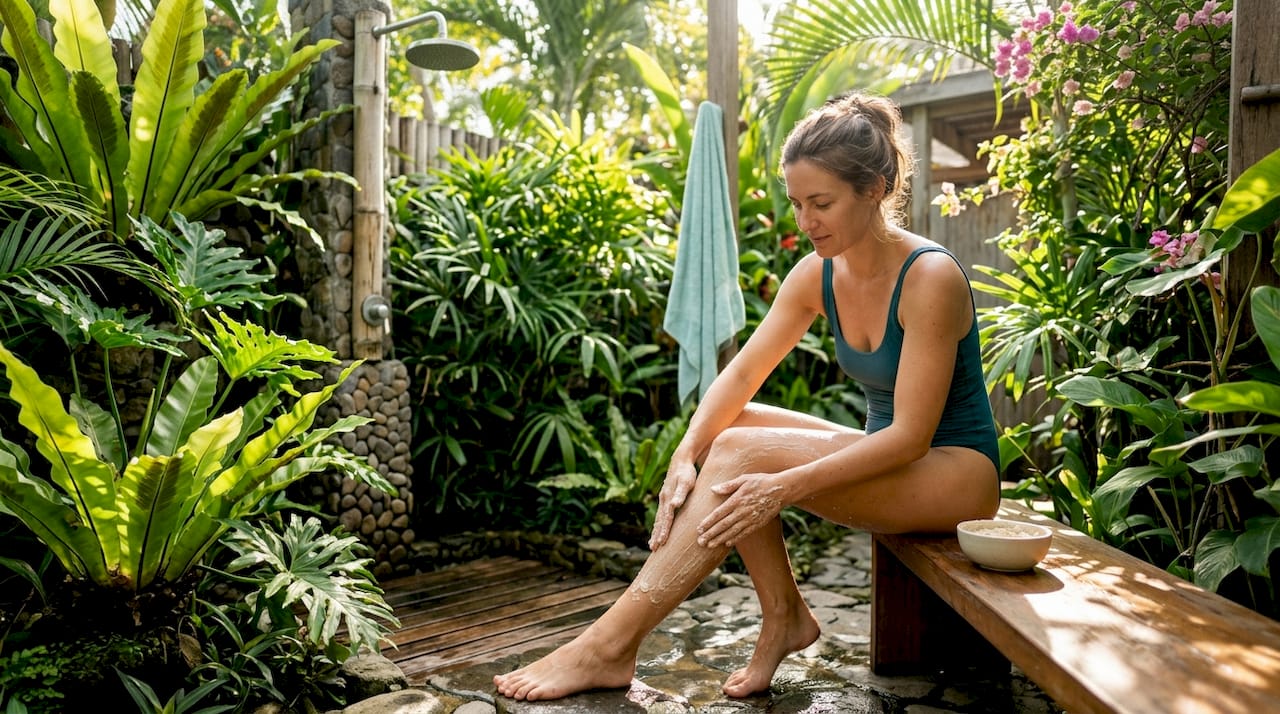
My honest read: prioritize skin prep over product hype. Exfoliation, patch testing, and gradual application matter more to your result and your skin’s tolerance than which bottle has the prettiest label. Pair that discipline with daily SPF, and you get the bronzed look without gambling on your skin’s future. That is the whole trade, and it is a good one.
Building a Safer Tanning Routine With Miamibeachbum
A good self-tan starts before the bottle ever opens, and it doesn’t end when the color sets. Skin prep, hydration, and post-tan sun protection all determine whether your tan looks natural and lasts, or turns patchy within two days.
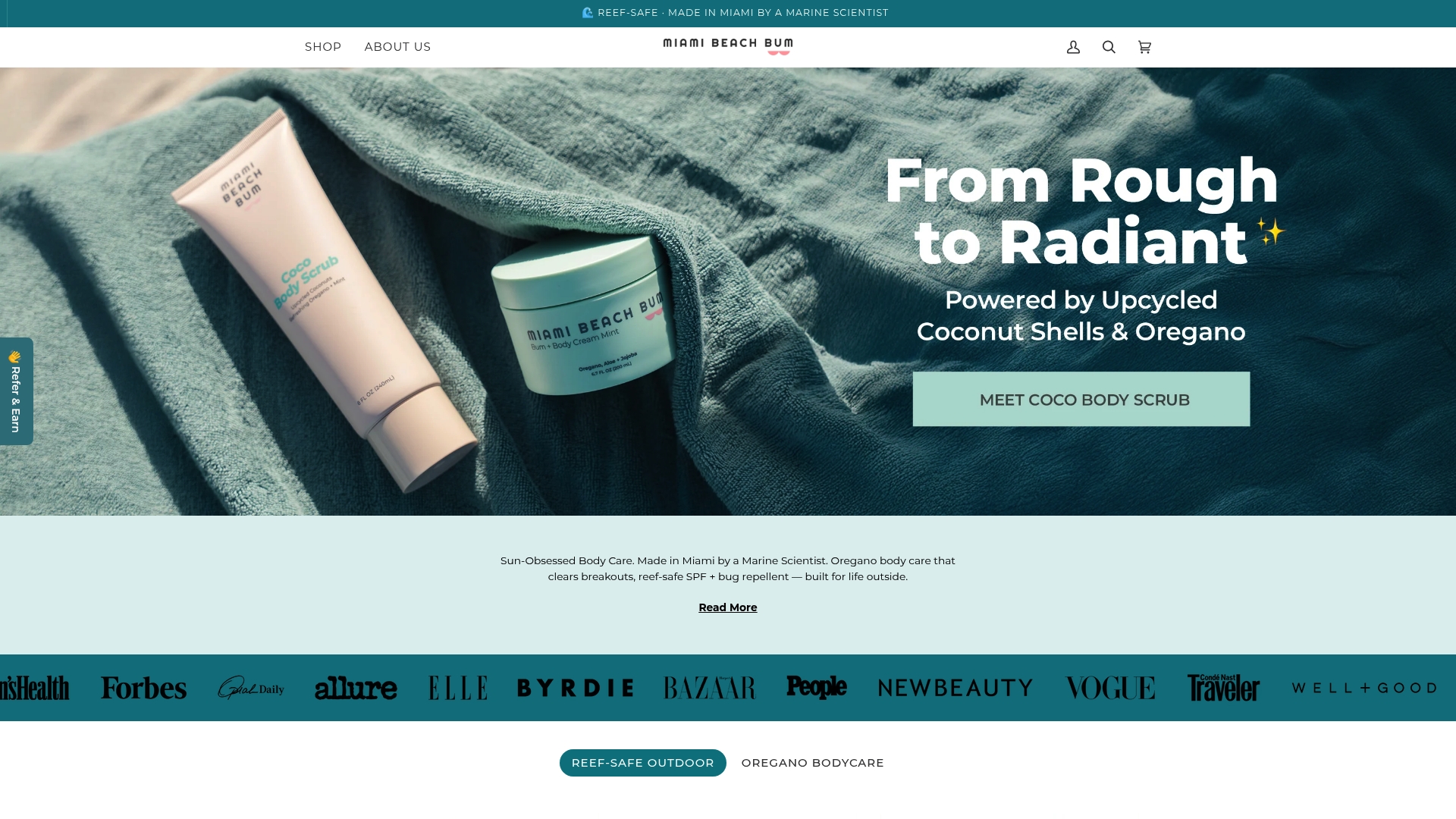
Miamibeachbum built its lineup around that full cycle instead of just the tanning step. The Coco Body Scrub clears dead skin and buildup before application, which is the single biggest factor in avoiding streaks. Afterward, the Bum + Body Cream keeps skin hydrated so your color fades evenly instead of flaking off in patches. Since self-tanner offers zero UV protection, pairing your routine with Blocked SPF50 mineral sunscreen isn’t optional if you’re heading outdoors, tanned or not. If you’re spending the day at the beach or pool, Hair Shield protects hair from sun and salt exposure so the rest of your routine holds up too.
Every product is formulated reef-safe, meaning what rinses off your skin isn’t damaging the ocean you’re heading out to enjoy. If you want to try the full sequence at once, the Bodycare Discovery Set bundles the exfoliant, moisturizer, and travel SPF together at a lower combined cost than buying each separately.
Sources
- Indoor tanning and risk of skin cancer (PMC)
- Sunless tanners and bronzers (FDA)
- 4 Best Self-Tanners of 2026, Tested by Experts (Consumer Reports)
- Tanning bed dangers (Cleveland Clinic)