


Yes, darker skin still needs daily SPF. Melanin offers some natural UV protection, but it does not block all UV radiation, visible light, or the DNA damage that leads to hyperpigmentation, premature aging, and skin cancer. The American Cancer Society notes that skin cancers in people of color are often diagnosed at later, more dangerous stages, partly because the assumption of natural protection delays both prevention and screening. The Cleveland Clinic recommends broad-spectrum SPF 30+ as a daily baseline for all skin tones.
The three reasons SPF matters most for darker skin:
- Hyperpigmentation control. Sun exposure stimulates melanin production and darkens existing spots, making topical brightening treatments far less effective without daily photoprotection.
- Photoaging prevention. Cumulative UV and visible-light exposure breaks down collagen and causes uneven tone over time, regardless of skin depth.
- Skin cancer risk reduction. Later-stage diagnoses are more common in people of color, making prevention and early detection more critical, not less.
Table of Contents
- The biggest myths about sunscreen and darker skin
- How melanin actually works, and where it falls short
- Why sunscreen benefits darker skin beyond avoiding sunburn
- What SPF number and formula should you actually use?
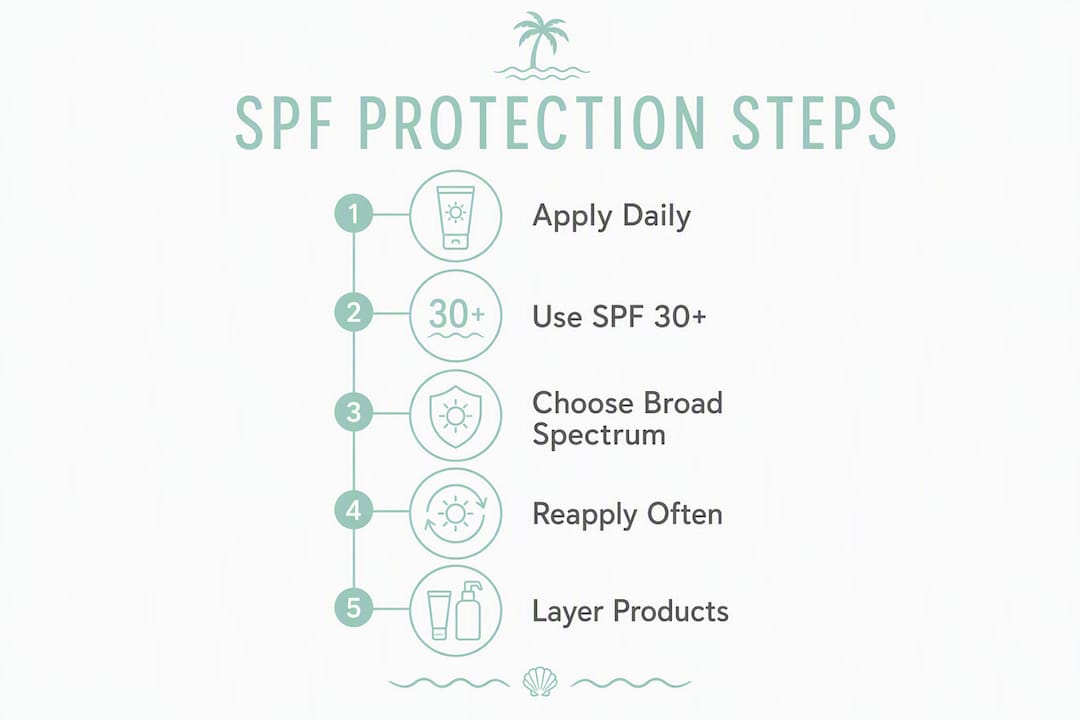
- How to apply sunscreen so it actually works
- What the research says about visible light, UVA1, and layering
- When to see a dermatologist about skin changes
- Key Takeaways
- The case for taking SPF seriously with darker skin
- Miamibeachbum’s Blocked SPF50 is built for real daily use
- Useful sources
The biggest myths about sunscreen and darker skin
The most persistent myth is that darker skin simply does not burn or sustain sun damage. Melanin does reduce UV sensitivity, but it does not eliminate it. A second myth follows closely: that a tan is a sign of healthy skin. A tan is the skin’s response to DNA damage, not evidence of protection.
A third misconception is that sunscreen is a product designed for light skin. The opposite is true for one of the most common skin concerns in people of color. Sunscreen is a mandatory daily step to keep hyperpigmentation treatments working. Without it, dark spots return faster and brightening products lose most of their effect.
“Everyone needs sunscreen,” says Dr. Jenna Lester, a dermatologist cited by AP News. A tan on any skin tone is a sign of damage, not a shield against it.
The UVA Health guidance on skin of color reinforces this directly: more melanin is not enough to block all UV radiation, and the clinical recommendation is to use a broad-spectrum SPF 30+ every day for all skin tones. For more on common sunscreen myths, Miamibeachbum’s blog breaks down the most widespread misconceptions.
How melanin actually works, and where it falls short
Melanin is produced by cells called melanocytes in the epidermis. In darker skin, melanocytes produce more melanin and distribute it more densely, which does absorb and scatter some UV radiation before it reaches deeper skin layers. This is why darker skin has a higher natural SPF equivalent than lighter skin.

The gap, though, is significant. Melanin does not block UVA1 rays, which penetrate deeply and drive collagen breakdown. It also does not block visible light, including blue light from screens and indoor lighting. Research published in the British Journal of Dermatology confirms that visible light and UVA1 are primary drivers of hyperpigmentation disorders in darker skin tones, including melasma and post-inflammatory hyperpigmentation (PIH).
The American Cancer Society reports that skin cancers in people of color frequently appear in less sun-exposed areas, including the palms, soles, and under the nails, and are more often diagnosed at advanced stages. That pattern reflects how the assumption of melanin-as-full-protection leads to delayed screening, not just delayed sunscreen use.
Why sunscreen benefits darker skin beyond avoiding sunburn
Sunburn is the least of the reasons to wear SPF if you have a deeper skin tone. The day-to-day benefits are more visible and more immediate.
- Dark spot control. Sun exposure darkens existing hyperpigmentation and triggers new spots. Daily SPF slows that cycle.
- Better treatment outcomes. Clinicians consistently report that patients using brightening treatments for melasma or PIH see limited results without daily photoprotection. SPF is not optional support for those treatments; it is a prerequisite.
- Collagen preservation. UV and visible-light exposure degrades collagen over time, leading to fine lines and uneven texture. Darker skin is not immune to this process.
- Reduced cancer risk. Lowering cumulative UV exposure reduces the risk of squamous cell carcinoma, basal cell carcinoma, and melanoma, all of which carry worse outcomes when diagnosed late.
Pro Tip: If you have spent money on vitamin C serums, niacinamide, or professional brightening treatments and are not seeing results, skipping SPF is almost certainly why. Daily sunscreen is often the missing step, not the product itself. For more on the full skincare benefits of daily SPF, Miamibeachbum’s guide covers what consistent protection actually does for your skin over time.
What SPF number and formula should you actually use?
The clinical baseline is SPF suitable for daily use, with higher protection recommended for extended outdoor time. Both numbers assume correct application amounts, which most people underestimate.
Beyond the number, the formula type matters more for darker skin than for lighter skin. Here is what to look for:
- Broad-spectrum label. This confirms protection against both UVA and UVB. Without it, you are only blocking part of the spectrum.
- Tinted mineral options. Zinc oxide and titanium dioxide sit on the skin surface and can leave a white or ashy cast on deeper complexions. Tinted versions add iron oxides, which blend into deeper skin tones and extend protection into the visible-light range that drives hyperpigmentation.
- Lightweight chemical formulas. Chemical sunscreens absorb UV rather than reflecting it and leave no cast. Confirm they are broad-spectrum and that the formula works with your existing skincare routine.
For body use, water-resistant body SPF is the practical choice for outdoor activities. For the face, a tinted mineral serum or lightweight chemical SPF tends to wear better under makeup. For choosing between chemical and mineral formulas, skin type matters: oily or acne-prone skin often tolerates lightweight chemical SPF better, while dry skin tends to benefit from the added emollients in many mineral formulas.
Pro Tip: Before buying a full-size tinted mineral sunscreen, apply a small amount to your jaw or inner wrist in natural light. Check for any purple or ashy tone after 60 seconds. Consumer Reports testing found that many sunscreens leave no visible cast on darker skin, but wearability varies by brand and undertone, so a patch test saves money and frustration.
How to apply sunscreen so it actually works
Getting the right product is only half the equation. Application amount and timing determine whether the SPF number on the label translates to real protection.
- Face amount. Use an adequate amount for the face and neck. Most people apply less than half the amount needed to reach the labeled SPF.
- Body amount. For full-body outdoor application, use an amount sufficient to cover all exposed skin. Spread evenly and do not skip the tops of feet, ears, and the back of the neck.
- Timing. Apply sunscreen after serums and moisturizer but before makeup. Chemical sunscreens benefit from a 15-minute window before sun exposure; mineral sunscreens work immediately.
- Reapplication. Every 2 hours during outdoor exposure. Immediately after swimming or heavy sweating, regardless of the time elapsed.
- Indoor use. UVA rays penetrate window glass and can worsen melasma and dark patches. Apply SPF in the morning even on days spent mostly indoors, especially near windows.
Do not skip these areas. Ears, hands, feet, soles, and under the nails are sites where skin cancers in people of color are more frequently found and more often diagnosed late.
- Do not rely on makeup-only SPF. Foundation or powder with SPF is rarely applied in sufficient quantity to reach the labeled protection level.
- Do not mix sunscreen into your moisturizer. Diluting it reduces the concentration of active ingredients.
Pro Tip: Compliance is the real challenge. Keep a small tube of facial SPF next to your toothbrush so application becomes automatic. A facial SPF mist is a practical option for reapplication over makeup during the day. For layering sunscreen with body lotion correctly, Miamibeachbum’s guide on how to layer sunscreen and body lotion covers the right order and timing.
What the research says about visible light, UVA1, and layering
The evidence connecting visible light to hyperpigmentation in darker skin is now well established. Research in the British Journal of Dermatology identifies UVA1 and visible light as key drivers of PIH and melasma in skin of color. Standard broad-spectrum sunscreens block UVB and UVA2 but may not address UVA1 or visible light, which is why tinted mineral formulas with iron oxides are specifically recommended for darker skin tones.
| Protection target | Why it matters for darker skin | Best formula type |
|---|---|---|
| UVB | Sunburn, surface DNA damage | Any broad-spectrum SPF 30+ |
| UVA2 | Deeper DNA damage, photoaging | Broad-spectrum label required |
| UVA1 | Collagen breakdown, melasma | Zinc oxide or avobenzone-based |
| Visible light | PIH, melasma worsening | Tinted mineral with iron oxides |
Clinical guidance from the Cleveland Clinic and the American Cancer Society aligns on a layered approach: SPF 30+ as the daily baseline, tinted mineral for visible-light coverage, and consistent reapplication for outdoor exposure. The partner guidance from Enriched Med Spa reinforces that daily photoprotection is non-negotiable when combining SPF with professional brightening treatments.
A practical checklist for daily protection:
- Tinted mineral SPF 30+ in the morning (face)
- Water-resistant body SPF for any outdoor activity
- Reapply every 2 hours outdoors
- Use brightening treatments (niacinamide, retinoids, vitamin C) at night, after SPF is no longer needed
- Avoid skipping SPF on cloudy days; UVA penetrates cloud cover
When to see a dermatologist about skin changes
Hyperpigmentation from sun exposure is common and manageable. Some skin changes, though, need medical evaluation rather than a new skincare product.
See a dermatologist if you notice:
- A new or changing pigmented lesion, especially one that is growing, bleeding, or has irregular borders
- A sore or lump that does not heal within a few weeks
- Dark patches that expand rapidly or change color
- Any lesion on the palms, soles, or under the nails, sites where skin cancers in people of color are more frequently found and more often caught late
- Nail changes, including dark streaks under the nail that were not there before
When you see a dermatologist, mention your history of hyperpigmentation treatments and describe any recent changes in a lesion’s color, size, or texture. That context helps the clinician distinguish between PIH and something that needs a biopsy. Earlier evaluation consistently leads to better outcomes.
Key Takeaways
Darker skin still needs daily broad-spectrum SPF 30+ because melanin does not block UVA1, visible light, or the DNA damage that drives hyperpigmentation, photoaging, and skin cancer.
| Point | Details |
|---|---|
| SPF 30+ is the daily baseline | Use broad-spectrum SPF 30+ every day; choose SPF 50+ for extended outdoor exposure. |
| Tinted mineral blocks visible light | Iron oxides in tinted formulas protect against visible light that worsens PIH and melasma. |
| Apply the right amount | Use a nickel-to-quarter-sized amount for the face; 1 ounce for a full-body outdoor application. |
| Protect indoors too | UVA penetrates window glass; apply SPF in the morning even on mostly indoor days. |
| Miamibeachbum Blocked SPF50 | A reef-safe, high-SPF option designed for comfortable daily wear and outdoor protection. |
The case for taking SPF seriously with darker skin
The conversation around SPF and darker skin has shifted, but not fast enough. The old framing, that sunscreen is a light-skin product, has real consequences: later skin cancer diagnoses, hyperpigmentation that resists treatment, and collagen damage that accumulates quietly over years.
What gets overlooked is that the motivation for SPF use often differs by skin tone. For many people with darker complexions, the primary reason to wear sunscreen is not sunburn prevention. It is dark spot control, treatment efficacy, and long-term skin tone evenness. That is a completely valid and clinically supported reason, and it deserves to be centered in the conversation rather than treated as secondary to burn risk.
The products have also improved. Tinted mineral formulas with iron oxides now exist specifically to address visible-light protection without leaving an ashy or purple cast. The barrier to daily use is lower than it has ever been. The remaining barrier is mostly informational, which is exactly what this article is here to address.
Miamibeachbum’s Blocked SPF50 is built for real daily use
Choosing a sunscreen you will actually wear every day is the whole game. Miamibeachbum’s Blocked SPF50 is a reef-safe, broad-spectrum formula built for comfortable, consistent use outdoors. It delivers high-SPF protection without the heavy residue that makes many sunscreens feel like a chore to apply.
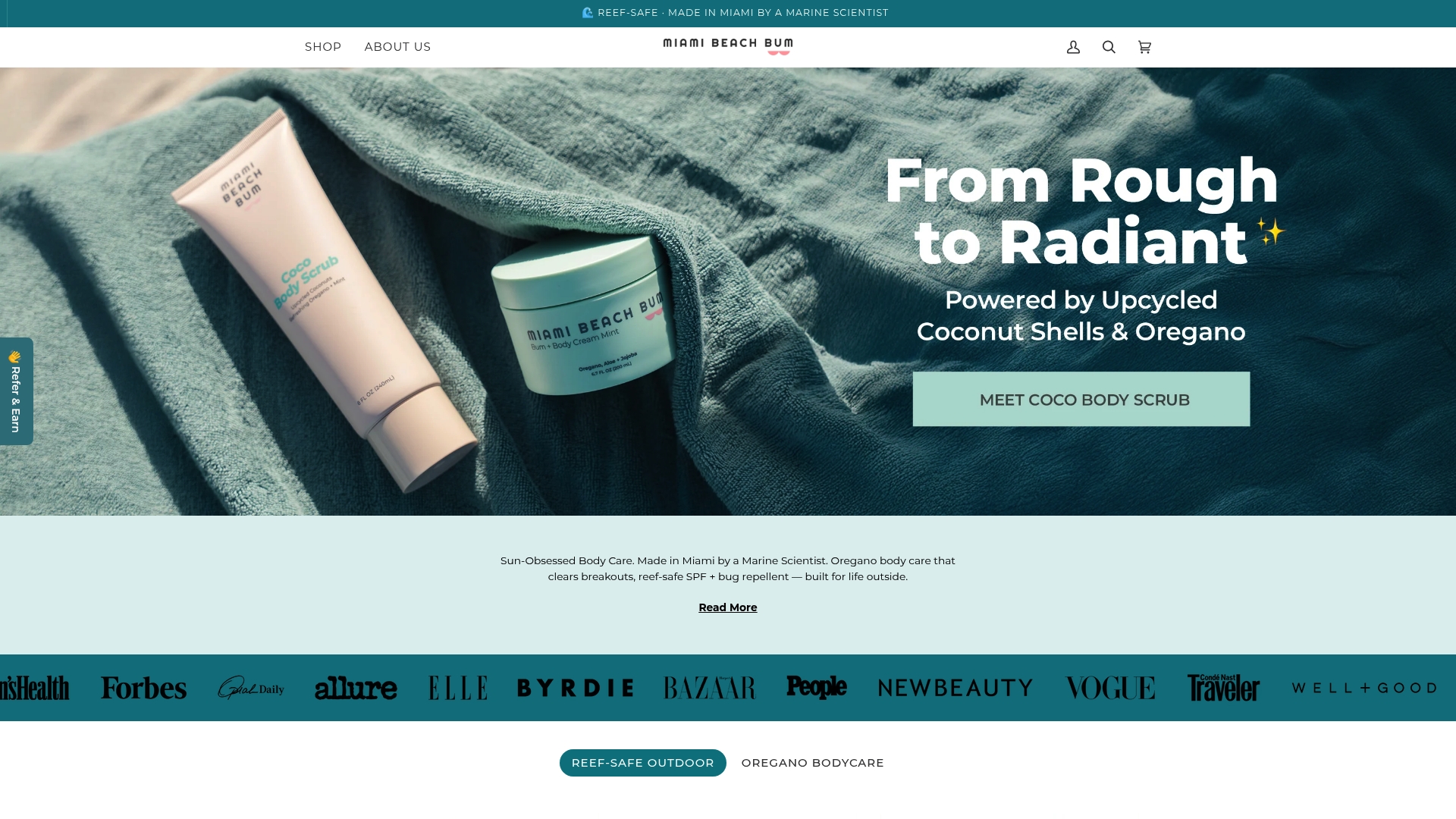
For face-specific protection, the Save Face SPF 50 Sheer Mineral Facial Serum is a lightweight mineral option designed to sit comfortably under makeup without a white cast. Both products align with the clinical guidance in this article: broad-spectrum coverage, SPF 50, and formulations that make daily application realistic rather than aspirational.
Not sure where to start? The Bodycare Discovery Set lets you try before committing to a full-size product. These are sun care tools, not medical treatments, but consistent daily use is exactly what the research supports for managing hyperpigmentation and reducing long-term UV damage.
Useful sources
- The Importance of Sunscreen for Dark Skin Tones — Cleveland Clinic
- What People of Color Need to Know About Sun Protection and Skin Cancer — American Cancer Society
- You should wear sunscreen even if you have darker skin. Here’s why — AP News
- Photoprotection for people with skin of colour — British Journal of Dermatology
- Best Sunscreens for People With Dark Skin — Consumer Reports
- Do Black People Need Sunscreen? Myths v. Facts — UVA Health
- Photoprotection in skin of color — PubMed / NCBI
- The importance of sunscreen — Enriched Med Spa