


A short checklist covers the essentials: schedule before 10:00 a.m. or after 4:00 p.m., set up anchored shade, apply broad-spectrum SPF 30–50 (use Blocked SPF50 on face and body), wear UPF clothing and polarized sunglasses, and keep water plus a basic first-aid kit on hand. That is the core of any solid sun protection rooftop hang guide.
Before guests arrive, check these off:
- Check the UV index on your phone — protect at UV 3 or above, even on cloudy days
- Set up at least one anchored shade structure over the main seating area
- Apply sunscreen 20 minutes before heading up
- Fill a cooler with water and electrolyte drinks
- Lay down light-colored rugs or mats over hot pavers
- Pack a small first-aid kit with burn gel, cooling towels, and a thermometer
CDC sun-safety guidance and EPA cool-roof research back every item on that list.
Table of Contents
- When should you schedule a rooftop hang to avoid peak UV?
- What sunscreen actually works on a rooftop?
- What clothing and eyewear protect you best on a rooftop?
- How do you protect hair and scalp at a rooftop event?
- How do rooftop surfaces affect heat, and what can you do about it?
- What rooftop safety steps prevent trips, falls, and heat illness?
- Rooftop hang packing list
- Sun safety for children and vulnerable guests
- Should you use UV-protective films or coatings on rooftop surfaces?
- How much water do you need on a rooftop, and how do you spot dehydration?
- How long can each person stay in the sun based on skin type?
- What is your emergency response plan for heat illness or sunburn?
- Key Takeaways
- The one thing most rooftop hosts get wrong
- Miamibeachbum picks for your rooftop hang
- Sources and further reading
When should you schedule a rooftop hang to avoid peak UV?
Schedule before 10:00 a.m. or after 4:00 p.m. when possible. CDC guidance identifies 10:00 a.m.–4:00 p.m. as peak UV intensity hours, with the most intense window often falling between 11:00 a.m. and 3:00 p.m. On a rooftop, that window hits harder than at ground level because UV reflects off HVAC units, light-colored membranes, and metal railings, effectively increasing your total dose.
UV note: NFRC guidance confirms UV can reach damaging levels even on overcast days, particularly March through October across most U.S. regions.
If your hang falls during peak hours, plan rotating shade breaks every 30–45 minutes. Use a free UV index widget (Weather.gov or the EPA’s AirNow app both show real-time UV) to pick your start and end times. A 4:00 p.m. start cuts peak exposure significantly while keeping the golden-hour light everyone wants for photos.
- Check UV index the morning of the event
- Plan shade rotations every 30–45 minutes during peak hours
- Aim for a 4:00 p.m. or later start for afternoon hangs
- Remind guests to reapply sunscreen after each shade break
What sunscreen actually works on a rooftop?
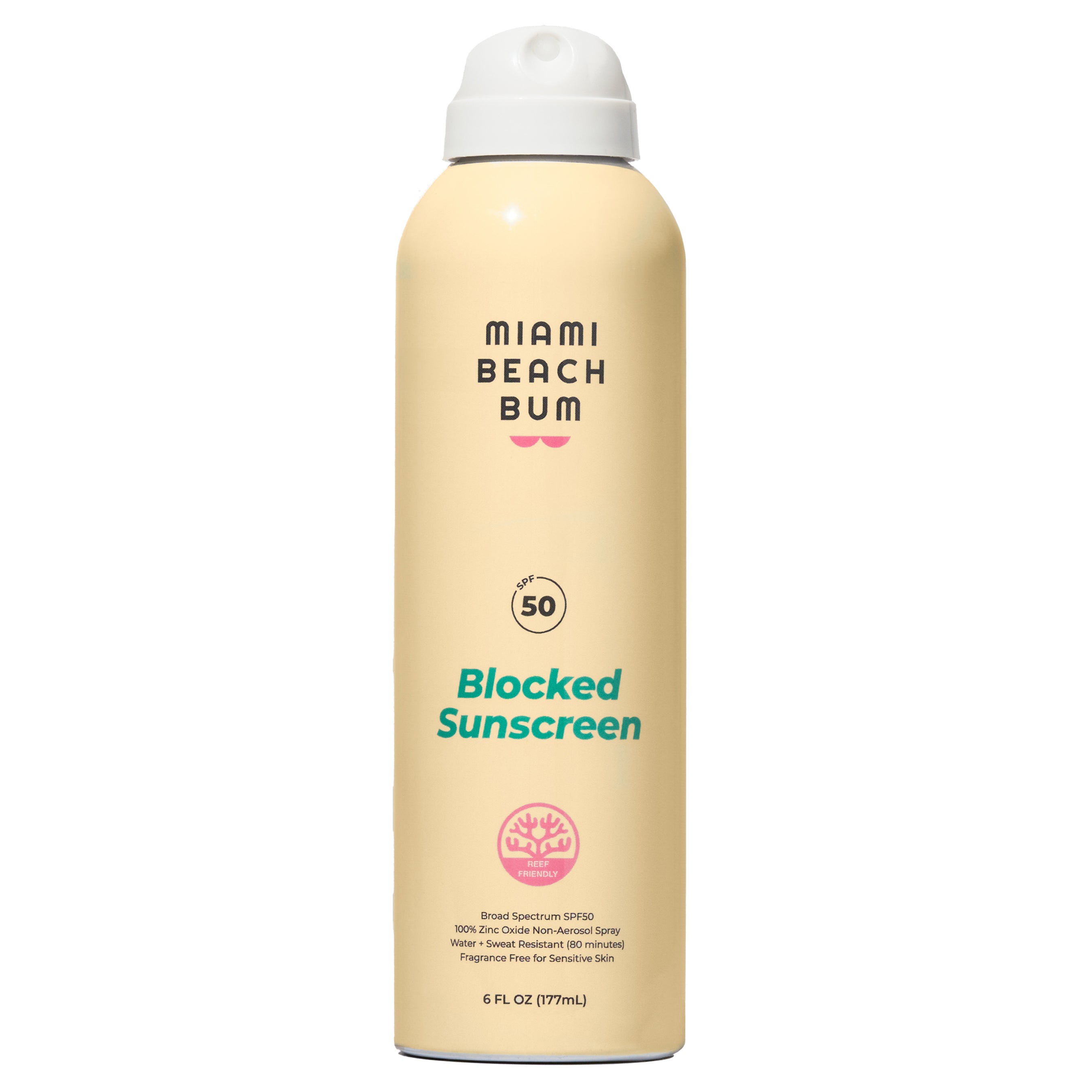
Use broad-spectrum SPF 30–50. For the face, a mineral option like Save Face SPF 50 or Blocked SPF50 sits better under sweat and wind than most chemical formulas. Mineral vs. chemical sunscreen comes down to one practical difference on a rooftop: physical (mineral) blockers sit on the skin surface and don’t require absorption time, which matters when guests are already outside.
Wind and sweat degrade sunscreen faster than most people expect. CDC reapplication guidance is clear: apply at least 1 ounce (roughly a shot glass) 20 minutes before exposure, then reapply every 2 hours or sooner after heavy sweating.
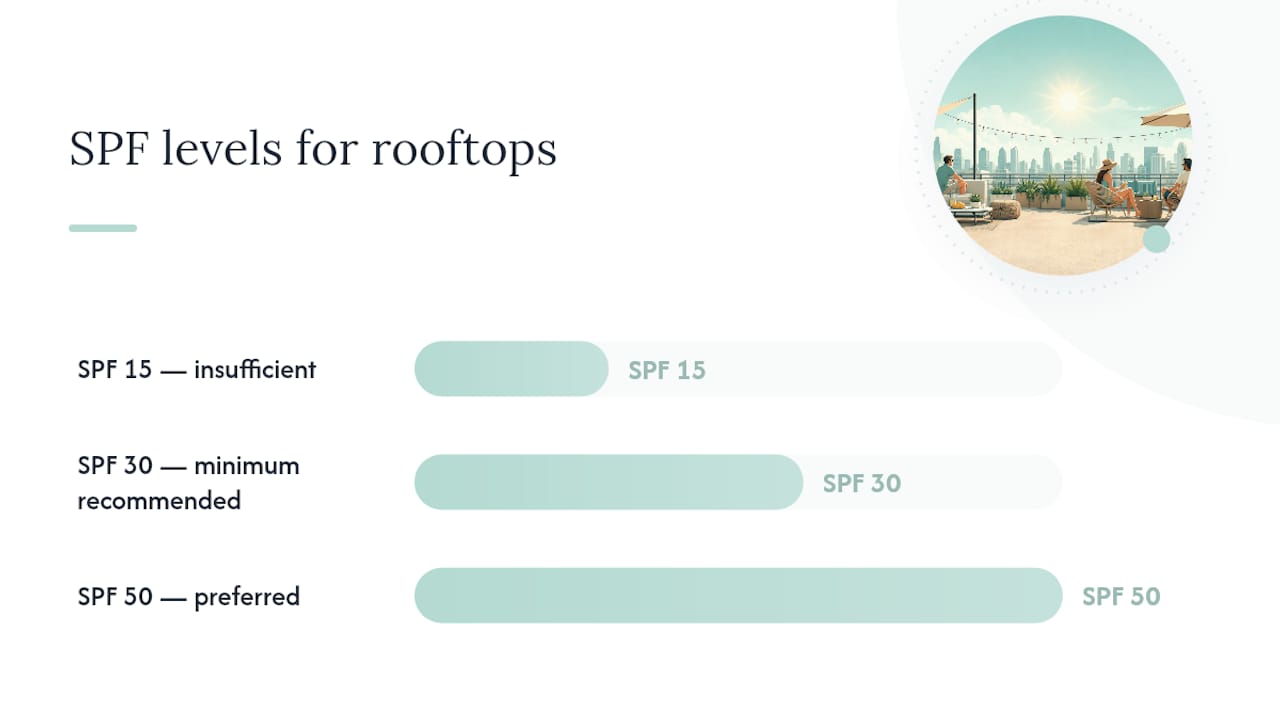
| SPF Level | UV Blocked | Reapply Cadence | Rooftop Notes |
|---|---|---|---|
| SPF 15 provides some UV protection but is insufficient for full rooftop exposure | |||
| SPF 30 is the minimum recommended level of UV protection | |||
| SPF 50 is preferred for rooftop conditions |
Commonly missed zones: ears, neck, and scalp part-lines get the most reflected UV and the least reapplication attention. Set up a small reapplication station — a basket with sunscreen, a mirror, and cotton pads — so guests can touch up without hunting through bags.
Pro Tip: Spray sunscreens drift in rooftop wind. Apply them into your palm first, then rub onto skin. Better yet, switch to a cream or stick formula for ears and neck.
What clothing and eyewear protect you best on a rooftop?
Prioritize UPF 30–50 clothing, wide-brim hats, and polarized sunglasses with UV400 coverage. UPF 50+ fabrics block roughly 98% of UV, outperforming a single sunscreen application for torso and arm coverage during a multi-hour hang.
Fabric weight matters. Lightweight UPF fabrics in a moderate weight range protect without trapping heat. Heavy UPF fabrics work for cooler months but are impractical for a summer rooftop. Look for linen-blend or moisture-wicking UPF options that read as stylish rather than technical.
Polarized sunglasses do more than reduce squinting. Glare from reflective rooftop surfaces impairs depth perception, which increases trip and fall risk near edges, stairs, and HVAC equipment. UV400 polarized lenses block the full UV spectrum and cut reflected glare from metal and membrane surfaces.
Quick outfit combos:
- Daytime party: Lightweight UPF linen shirt, wide-brim hat, UV400 polarized sunglasses
- Late-afternoon hang: Hooded UPF top, baseball cap, wraparound polarized frames
- Warm evening: Loose UPF cover-up over a tank, wide-brim straw hat
Pro Tip: A wide-brim hat with sufficient brim to shade ears and neck shades the ears and neck — two of the highest-damage zones on a rooftop, per Roofr’s field guidance.
How do you protect hair and scalp at a rooftop event?
Combine scalp sunscreen or a UV-filtering leave-in conditioner with a hat or hooded UPF top. The scalp is one of the most UV-exposed areas on a rooftop and one of the least protected. Spray scalp sunscreens apply discreetly without disrupting a style. Miamibeachbum’s leave-in beach hair conditioner adds a botanical moisture barrier that helps offset UV-related dryness throughout the event.
Practical styling for a rooftop hang:
- Loose braids or a low bun reduce direct scalp exposure along the part line
- A wide-brim hat covers the hairline and ears simultaneously
- Carry a small scalp spray for touch-ups between drinks and photos
- Reapply leave-in conditioner to ends if hair is in direct sun for more than two hours
How do rooftop surfaces affect heat, and what can you do about it?
Lighter surfaces, temporary rugs, fans, and misters lower surface temperatures and reduce heat stress for guests. EPA cool-roof research shows that high solar reflectance and thermal emittance in roofing materials reduce both surface temperature and ambient heat. For a one-day event, you can replicate that effect with temporary measures.
| Mitigation | Effect on Surface Heat | Event Practicality |
|---|---|---|
| Light-colored rugs/mats | Reduces direct contact heat | High — easy to bring up |
| Portable fans | Lowers perceived temperature | High — battery or plug-in |
| Misting fans | Drops air temp near guests | Medium — needs water source |
| Shade cloth over seating | Blocks direct solar gain | High — pairs with canopy |
Surface check: Before guests arrive, hold the back of your hand 2 inches above the pavers for 3 seconds. If it’s uncomfortable, the surface will burn bare feet and heat up chairs quickly. Cover those areas first.
Pro Tip: Dark membrane rooftops absorb the most heat. If your rooftop has a dark surface, prioritize rugs and shade cloth over seating areas — guests sitting in direct contact with dark surfaces will feel it within minutes.
What rooftop safety steps prevent trips, falls, and heat illness?
Reduce glare with polarized eyewear, mark edges and trip hazards, secure all shade and furniture, and have a heat-illness response plan ready. Skyline Group guidance identifies glare from HVAC units, skylights, and reflective membranes as a direct contributor to depth-perception errors near rooftop edges.
Signs of heat exhaustion (act quickly): heavy sweating, cool/pale skin, fast/weak pulse, nausea, muscle cramps. Move the person to shade, give cool water, apply a damp cooling towel to the neck and wrists.
Signs of heat stroke (call 911): hot/red/dry skin, rapid strong pulse, confusion, loss of consciousness. Cool the person immediately with ice packs to armpits and neck while waiting for emergency services.
Rooftop hang packing list
Priority A (must bring):
- Broad-spectrum sunscreen SPF 30–50 (one bottle per 4 guests)
- Blocked SPF50 for face and body
- Water jugs or a portable cooler with electrolyte drinks
- Anchored shade kit (umbrella + weighted base, or pop-up canopy + sandbags)
- Basic first-aid kit (burn gel, cooling towels, bandages, thermometer)
Priority B (helpful):
- UPF throws or light blankets for shoulders
- Portable battery fan or misting fan
- Spare polarized sunglasses
- Scalp spray or leave-in conditioner
- Non-slip footwear for guests
- Trash bags (for used sunscreen applicators and packaging)
Sun safety for children and vulnerable guests
Children under 6 months should stay out of direct sun entirely. For older children, apply SPF 30–50 broad-spectrum sunscreen 20 minutes before going up, reapply every 2 hours or sooner after heavy sweating (particularly for active children), and keep them in UPF clothing and wide-brim hats. Rooftop edges require physical barriers or constant supervision for any child under 10.
Older adults, pregnant guests, and anyone on photosensitizing medications (certain antibiotics, diuretics, and retinoids increase UV sensitivity) need shade access at all times, not just during peak hours. Set up a dedicated shaded seating area away from reflective surfaces and check in with these guests every 30 minutes during the event.
Should you use UV-protective films or coatings on rooftop surfaces?
UV-protective window films and surface coatings are worth considering for permanent or semi-permanent rooftop setups. For a one-time event, they are impractical. For a rooftop terrace used regularly, a UV-blocking film applied to glass railings or skylights reduces UV transmission and cuts glare. Look for films rated to block 99% of UV-A and UV-B, and verify the product’s NFRC rating for solar heat gain coefficient (SHGC) — a lower SHGC means less heat passing through.
For furniture, UV-resistant coatings on wood or metal surfaces extend the life of the furniture and reduce surface heat absorption. Apply these between events, not the day of.
How much water do you need on a rooftop, and how do you spot dehydration?
Drink water regularly during active rooftop time to stay hydrated in warm weather. That pace exceeds standard daily intake recommendations because rooftop heat and sun accelerate fluid loss through sweat. Electrolyte drinks help retain fluids during longer events.
Early dehydration signs: dark urine, dry mouth, mild headache, reduced alertness. By the time someone feels thirsty on a rooftop, they are already mildly dehydrated. Set a visible water station and prompt guests to drink on a schedule rather than waiting for thirst.
Portable hydration options: insulated water jugs (1–2 gallons per 10 guests), individual electrolyte packets, and a small cooler with ice for cooling towels double as a hydration station. A seasonal skincare checklist from Evo Youthful also notes that hydration directly affects how skin responds to sun exposure — well-hydrated skin tolerates UV stress better than dry skin.
How long can each person stay in the sun based on skin type?
Skin type determines how quickly UV causes damage, not just how quickly someone burns. People with very fair skin (Fitzpatrick Type I–II) may begin to burn in as little as 10–15 minutes at a UV index of 6 or higher. Medium skin tones (Type III–IV) have a longer threshold but still accumulate UV damage without visible burning. Darker skin tones (Type V–VI) have more natural melanin protection but are not immune to UV damage or heat illness.
A practical rule: limit unshaded exposure to 20 minutes per session regardless of skin type during peak UV hours, then rotate to shade. Track cumulative exposure across the event, not just single sessions.
What is your emergency response plan for heat illness or sunburn?
Designate one person as the safety lead before the event starts. That person knows the building’s emergency exit, has the first-aid kit, and knows the difference between heat exhaustion and heat stroke (covered in the safety section above).
For sunburn during the event: move the guest to shade, apply a cool (not ice-cold) damp cloth, offer water, and use an after-sun skincare product with aloe or ceramides once back indoors. Do not apply butter, oil, or toothpaste. Severe blistering or sunburn covering large body areas warrants a call to a medical provider.
Post the building’s address and nearest urgent care location in the event group chat before guests arrive. In a heat emergency, seconds matter.
Key Takeaways
Rooftop sun protection requires layering time, shade, SPF 50, UPF clothing, and hydration — no single measure works alone.
| Point | Details |
|---|---|
| Schedule outside peak UV hours | Plan before 10:00 a.m. or after 4:00 p.m.; check UV index even on cloudy days. |
| Anchor shade before guests arrive | Use weighted bases or sandbags — unsecured umbrellas become wind hazards above 25 mph. |
| Apply and reapply SPF 50 | Use 1 ounce per application, reapply every 2 hours, and cover ears, neck, and scalp part-lines. |
| Hydrate on a schedule | Drink 8 oz every 20 minutes; don’t wait for thirst — it arrives after dehydration has already started. |
| Miamibeachbum for face and body | Blocked SPF50 and Save Face SPF 50 cover the commonly missed zones with reef-safe mineral protection. |
The one thing most rooftop hosts get wrong
Most hosts think about sunscreen and forget about shade anchoring and reapplication logistics. You can have the best SPF 50 on the market and still end up with a burned group if the umbrella blows over at 1:00 p.m. and nobody restocks the sunscreen station. The physical setup matters as much as the products.
What actually works: a single anchored canopy over the main seating area, a visible reapplication basket with Miamibeachbum’s Blocked SPF50 and a mirror, and a water station guests walk past every time they move. That combination handles the three biggest failure points: shade loss, missed reapplication, and dehydration. The polarized sunglasses and UPF clothing are the layer that prevents the trips and glare-related incidents that nobody plans for. Rooftop edges and reflective surfaces are genuinely hazardous when glare is high — that is not an exaggeration.
Miamibeachbum picks for your rooftop hang
Miamibeachbum’s reef-safe mineral lineup is built for exactly this situation: outdoor sun exposure where you need products that hold up to sweat, wind, and repeated reapplication without irritating skin or leaving a heavy residue.
Blocked SPF50 is the priority pick for face and body. Mineral, broad-spectrum, and reef-safe — apply it 20 minutes before heading up and reapply every 2 hours. It works for every guest at the station, not just the host.
Save Face SPF 50 (shop here) is the sheer mineral facial serum for guests who want coverage without a white cast. Ideal for anyone wearing makeup or who prefers a lighter feel on the face.
Leave-in beach hair conditioner rounds out the kit with botanical UV protection for hair and scalp — apply before going up and carry a travel size for mid-event touch-ups.
Pick up all three or start with the Bodycare Discovery Set for a compact, event-ready bundle. Shop at miamibeachbum.com.
Sources and further reading
- Sun Exposure at Work | Outdoor | CDC
- Using cool roofs to reduce heat islands | EPA
- Sun Protection for Roofers: A Summer Guide | Roofr
- Solar Panel Installer Sun Protection: UPF 50+ for Rooftop All-Day Expo — WindRider
- Rooftop Safety in Summer: A Practical Guide for Stakeholders
- Sun Safety as a Roofer: Why and How to Protect Your Skin | NFRC