


Seven items cover the basics for a sun-safe outdoor concert: broad-spectrum sunscreen, a wide-brim hat, UV-blocking sunglasses, a refillable water bottle or hydration plan, sun-safe clothing, a compact blanket or tarp, and a small bag with ID, meds, and a power bank. Each one addresses a specific risk: UV burns accumulate fast on open lawns, dehydration sets in before you feel thirsty, and venues turn away bags that don’t meet size or transparency rules.
Copy this before you leave:
- Broad-spectrum sunscreen (travel-size in an outer pocket)
- Wide-brim hat or brimmed cap
- UV-blocking sunglasses
- Refillable water bottle or confirmed refill station plan
- Lightweight, breathable clothing (UPF-rated when possible)
- Compact blanket or waterproof tarp
- Small bag: ID, cash/cards, meds, power bank, ear protection
Table of Contents
- What should you check at the venue before the show?
- Sunscreen, shade, and heat health: what clinicians recommend
- What should you pack for an outdoor concert?
- What should you wear to an outdoor concert?
- Snacks, meds, cooling tools, and coordinating with your group
- Your printable concert day checklist
- When should you apply sunscreen before leaving the house?
- How do you manage sun exposure during peak UV hours?
- Sun protection strategies beyond sunscreen
- Key Takeaways
- The one mistake most concert-goers make with sun prep
- Miamibeachbum products that fit your concert kit
- Further reading and useful sources
What should you check at the venue before the show?
Bag rules and prohibited items vary by venue, and getting turned away at the gate wastes time and sun exposure. Check the venue’s website the day before. Most amphitheaters and festival grounds post a full prohibited-items list: common restrictions include hard-sided coolers, full-size umbrellas, chairs taller than some height, and bags over a certain size. Many venues now require clear bags for security speed.
Plan your arrival window with sun in mind. Arriving 30–45 minutes early gives you time to locate water refill stations, medical tents, and shaded rest areas before the crowd fills in. Pick a specific meeting spot with your group — a named gate, a food stand, a landmark — and share it before anyone splits up.
Pro Tip: Pull up the venue map on your phone while you’re still in the parking lot. Note the nearest medical tent and at least one shaded area. If a companion has a health condition, text them the medical tent location before the show starts.
Northwestern Medicine notes that outdoor event settings raise heat-illness risk, and locating medical tents and shade breaks before the event is part of responsible planning, not an afterthought.
Outdoor festivals increase the risk for heat-related illnesses. Plan for hydration, shade, and know where medical tents are before the event begins.
Sunscreen, shade, and heat health: what clinicians recommend
Dermatologists recommend broad-spectrum SPF 30+ at minimum for outdoor events, with SPF 50 preferred for full-day exposure. The formula should be water- and sweat-resistant and non-comedogenic so it won’t clog pores during hours of heat and activity.
Application amount and timing matter as much as the SPF number. About 1 ounce — roughly a shot glass — covers the full body. Apply 15–30 minutes before going outside so the formula bonds to skin before UV hits it. Reapply every two hours, or sooner after heavy sweating or toweling off.
| Factor | Recommendation |
|---|---|
| SPF level | Broad-spectrum SPF 50 for all-day events |
| Amount | ~1 oz for full-body coverage |
| Timing | Apply 15–30 min before sun exposure |
| Reapply cadence | Every 2 hours; sooner after heavy sweat |
| Formula | Water/sweat-resistant, non-comedogenic |
Heat illness runs on a spectrum. Heat cramps are the first warning: muscle pain and spasms, usually in the legs or abdomen. Heat exhaustion follows: heavy sweating, cool or pale skin, nausea, weakness, and a fast pulse. Heat stroke is the emergency: hot and dry or damp skin, confusion, and a body temperature above 103°F. If you or a companion shows signs of heat stroke, call 911 immediately, move to shade, and apply cool water to the skin.
Pro Tip: Ears, the back of the neck, lips, and the scalp along a part line are the most commonly missed spots. A stick sunscreen handles lips and hairlines cleanly without dripping. A mineral spray works fast for a mid-show touch-up without disturbing makeup.
What should you pack for an outdoor concert?
Packing for sun safety means putting the right items in the right place. Travel-size SPF in an outer pocket means you can reapply without unpacking everything at your feet. A cooling towel goes in the same pocket or clipped to a bag strap.
- Sunscreen: Travel-size SPF 50, outer pocket for fast access
- Hat: Wide-brim or brimmed cap; UPF-rated fabric adds a layer of protection
- Sunglasses: UV400 or 100% UV-blocking lenses
- Water: Refillable bottle or confirmed refill station route; sip early and often rather than waiting until you’re thirsty
- Cooling towel: Wet it, wring it, wear it around the neck
- Blanket/tarp: Experienced attendees pack two: a waterproof tarp for the ground and a lightweight blanket for warmth after sunset. This dual-blanket strategy provides ground protection and evening comfort, as recommended by seasoned festival-goers.
- Seat cushion: Check venue rules first; many permit low-profile cushions but ban chairs
- Small first-aid items: Blister bandages, pain reliever, antihistamine
- Power bank: Keeps your phone charged for maps, payments, and emergencies
- ID and cards: Required for entry and age-verified purchases
On bag choice: a crossbody bag or small backpack keeps your hands free and sunscreen accessible. If the venue requires a clear bag, pack a secondary zip pouch for personal items inside it. Check the venue’s food and drink policy before packing snacks — many outdoor venues permit sealed, non-alcoholic drinks and factory-sealed snacks, but rules vary.
What should you wear to an outdoor concert?
Lightweight, loose-fitting fabrics are the practical choice for long hours in the sun. Linen and cotton blends breathe well and dry fast. UPF-rated clothing blocks UV directly, which reduces how much sunscreen you need on covered skin. A long-sleeve UPF shirt worn during peak afternoon hours offers more consistent protection than sunscreen alone, since sunscreen wears off and UPF fabric doesn’t.
Temperature at outdoor venues can drop 15–20°F after sunset. Dress for the afternoon, but pack a layer for the evening.
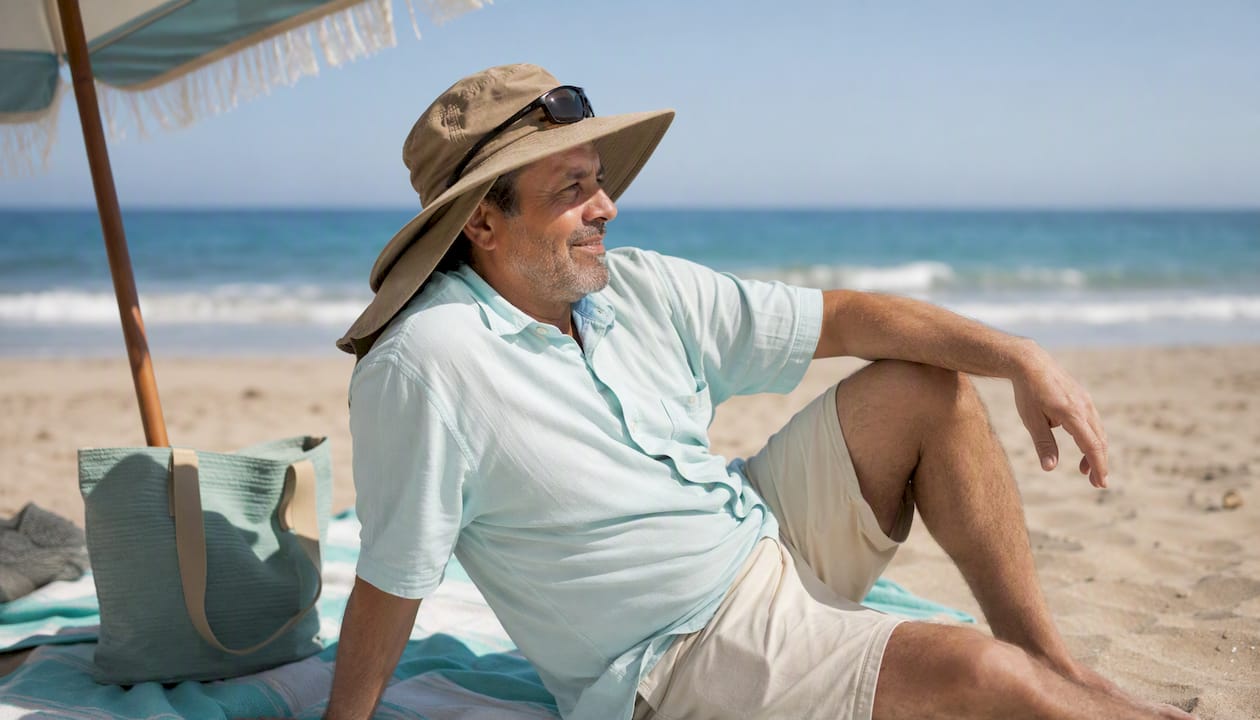
A wide-brim hat shades the face, ears, and neck simultaneously. A brimmed cap is better than nothing but leaves the ears and neck exposed. Sunglasses should carry a UV400 rating or a “100% UV protection” label — lens darkness alone doesn’t indicate UV blocking.
Footwear matters more than most people plan for. Closed-toe shoes with arch support handle uneven ground, long standing, and crowded conditions better than sandals or flip-flops. For older adults or anyone with balance concerns, slip-resistant soles and easy-to-adjust closures make a real difference over a four-hour show.
Snacks, meds, cooling tools, and coordinating with your group
Electrolyte-friendly snacks help maintain hydration when you’re sweating. Bananas, salty crackers, trail mix, and energy bars all work. Sodium and potassium lost through sweat need replacing, and plain water alone doesn’t do it after extended heat exposure.
Check urine color as a quick hydration check: light yellow generally means you’re hydrated; dark yellow means drink more water now.
Medications that require refrigeration or are heat-sensitive need a small insulated pouch. Bring more than you think you’ll need for the day, and check the venue’s policy on prescription storage at the gate. Some venues have medical staff who can hold medications in a cooled area.
Cooling bandanas and towels provide hours of relief and some UPF 50-rated options add UV protection at the neck. Misting sprays are compact and effective for a quick cool-down. Portable handheld fans work well in still air but add weight to your bag.
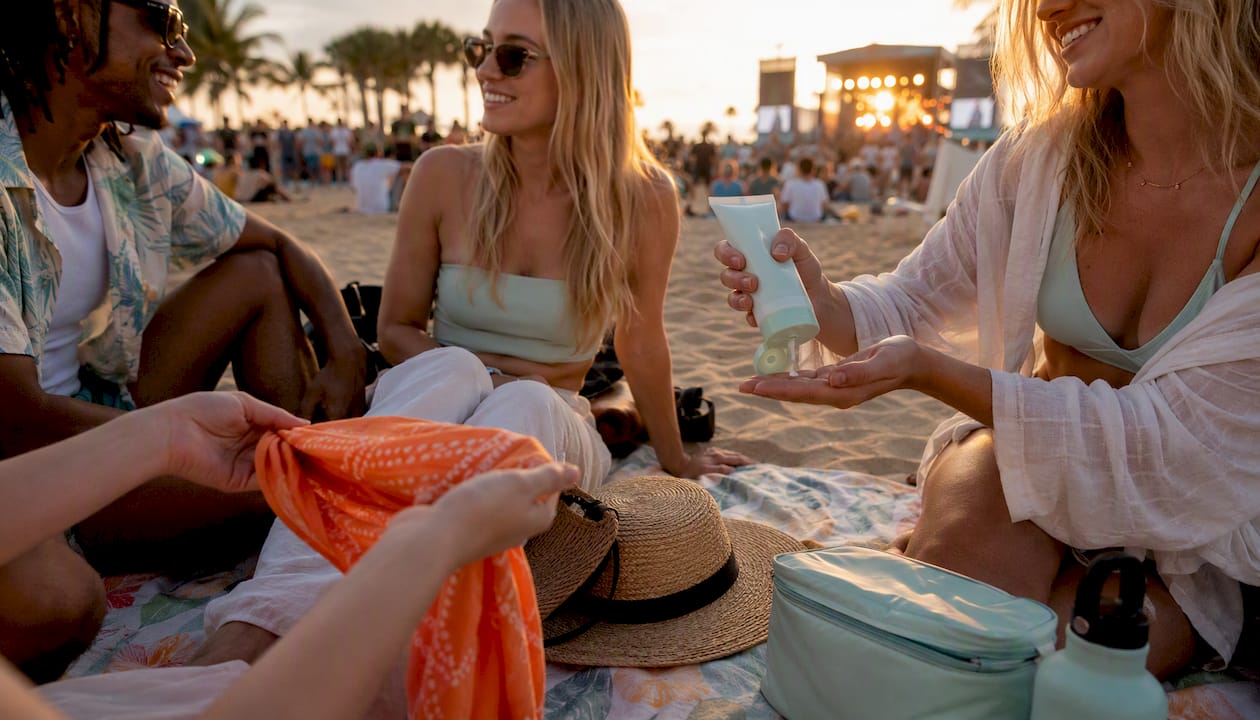
Pro Tip: Assign one person in your group as the check-in contact. Agree on a time to meet at a fixed spot — say, every 90 minutes at the water station near Gate B. This keeps everyone accountable for hydration and heat checks without constant texting in a loud crowd.
Your printable concert day checklist
Carry-on (in your bag or pockets)
- Broad-spectrum SPF 50 sunscreen, travel-size, outer pocket
- Wide-brim hat or brimmed cap
- UV-blocking sunglasses (UV400)
- Refillable water bottle
- Cooling towel or bandana
- Lightweight blanket or packable jacket — consider bringing both a tarp for the ground and a lightweight blanket for evening warmth, to be prepared for temperature drops after sunset.
- ID and payment cards
- Prescription meds in labeled pouch
- Power bank and charging cable
- Ear protection (foam plugs or reusable)
- Small first-aid kit (bandages, pain reliever, antihistamine)
Leave in the car
- Full-size umbrella (if prohibited at venue)
- Hard-sided cooler
- Extra layers or full change of clothes
- Backup sunscreen (full-size bottle)
When should you apply sunscreen before leaving the house?
Apply sunscreen 15–30 minutes before you step outside. This gives mineral and chemical formulas time to set on the skin before UV exposure begins. Don’t wait until you’re in the parking lot or at the gate.
For a daytime show that starts at noon, apply at home before you leave. If you’re driving 30+ minutes to the venue, reapplication timing still starts from when you first go outside, not from when the show starts. Apply to all exposed skin at home, then do a quick touch-up on the face and neck once you’re parked and heading to the entrance.
A mineral facial serum like Miamibeachbum’s Save Face SPF 50 is easy to apply over moisturizer at home and light enough to reapply mid-show without feeling heavy. Understanding how to layer sunscreen correctly prevents the common mistake of applying it under thick body lotion, which dilutes the SPF.
How do you manage sun exposure during peak UV hours?
Peak UV hours in the United States run roughly 10 AM to 4 PM. Most outdoor concerts fall squarely in this window. The UV index at midday can reach 8–11 on a clear summer day, which the EPA classifies as “very high” to “extreme.”
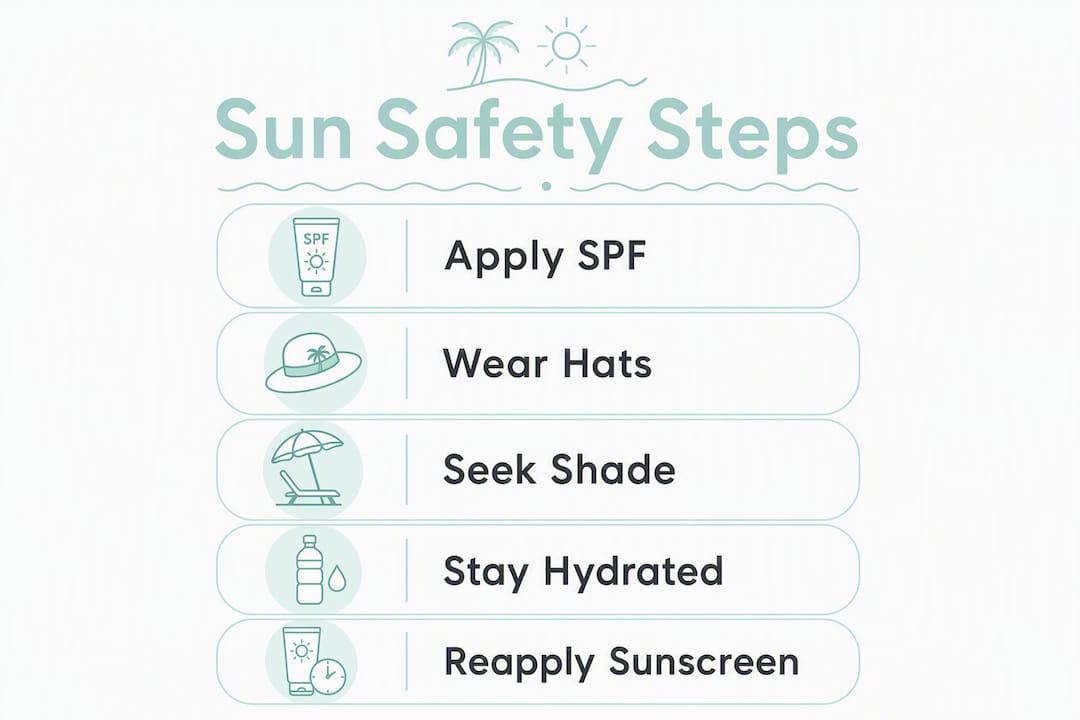
Seek shade during set breaks. Move to a shaded section, a covered food area, or under a tree for 10–15 minutes every hour if possible. Reapply sunscreen during these breaks. Wear your hat and sunglasses continuously, not just when it feels hot. UV exposure happens even when you don’t feel warm, on overcast days included.
Mass General Brigham Health Plan notes that summer heat and sun at concerts combine to create real health risks, and proactive shade-seeking is one of the most effective ways to reduce cumulative UV exposure over a long day.
Sun protection strategies beyond sunscreen
Sunscreen is one layer of protection, not the whole plan. Physical barriers block UV more consistently than any topical product because they don’t wear off or get wiped away.
A wide-brim hat with a 3-inch brim shades the face, ears, and the back of the neck. UPF-rated clothing on the arms and shoulders removes the need to reapply sunscreen to those areas every two hours. A lightweight UPF scarf or bandana covers the neck and doubles as a cooling tool when dampened.
Shade-seeking is the most underused strategy at concerts. Lawn areas often have tree lines or covered sections near the back. Arriving early lets you claim a spot with natural shade rather than fighting for it mid-show. If the venue permits umbrellas, a compact travel umbrella creates portable shade for you and the people around you. Check the prohibited items list first.
Sunglasses with UV400 lenses protect the eyes and the delicate skin around them, an area where sunscreen is hard to apply without irritation. The Cleveland Clinic identifies the area around the eyes as one of the most commonly missed spots for sunscreen application.
Key Takeaways
Applying SPF 50 at home, dressing in UPF layers, and planning for shade and hydration before you arrive covers the majority of sun-related risks at an outdoor concert.
| Point | Details |
|---|---|
| Apply SPF 50 before leaving | Put sunscreen on 15–30 min before going outside; reapply every 2 hours or after heavy sweating. |
| Hydrate before you’re thirsty | Sip water early and often; check urine color — light yellow means you’re on track. |
| Plan for shade and heat illness | Locate medical tents and shaded areas on arrival; know the signs of heat exhaustion and heat stroke. |
| Dress in breathable layers | Lightweight UPF clothing plus a packable jacket handles both peak sun and the 15–20°F evening drop. |
| Miamibeachbum Save Face SPF 50 | A reef-safe mineral facial serum that applies cleanly over moisturizer and reapplies easily mid-show. |
The one mistake most concert-goers make with sun prep
Most people treat sunscreen as a one-time task. They apply it at home, feel covered, and don’t touch it again for six hours. That’s the gap where burns happen.
The second mistake is dressing for noon and ignoring the evening. A tank top and shorts work at 2 PM. By 9 PM, when the temperature has dropped and you’ve been standing for hours, that same outfit leaves you cold and still sun-damaged from earlier. Layers solve both problems.
The third mistake is ignoring venue rules until the gate. A bag that’s two inches too wide or an umbrella on the prohibited list means repacking in a parking lot in the heat. Ten minutes of research the night before prevents all of it.
Miamibeachbum’s approach is built around the idea that reef-safe mineral formulas made by marine scientists should be the default, not a specialty item. That philosophy fits concert prep directly: a non-greasy, non-comedogenic SPF that you’ll actually reapply in a crowd is more useful than a heavy formula you avoid touching after the first application.
Miamibeachbum products that fit your concert kit
Skip the heavy, greasy sunscreen that ends up at the bottom of your bag after the first hour. Miamibeachbum’s reef-safe mineral formulas are built for exactly this: all-day outdoor exposure where reapplication actually has to happen.
The Save Face SPF 50 Sheer Mineral Facial Serum is the face-protection answer for concerts. It’s sheer, non-comedogenic, and light enough to press over makeup mid-show without smearing. Reef-safe and mineral-based, it fits the SPF 50 recommendation from dermatologists for extended outdoor events. For body coverage and after-sun care, the Bum + Body collection covers the full routine. If you want to try the range before committing to full sizes, the Bodycare Discovery Set packs trial sizes that fit inside a clear stadium bag without taking up space. Browse the full sun care range at miamibeachbum.com and add the right products to your concert kit before the show.
Further reading and useful sources
- Outdoor Festival Safety and Health Tips | Northwestern Medicine — Heat-illness prevention, hydration rules, and medical tent planning for outdoor events.
- Sunscreen for Outdoor Concerts, Sports & Festivals | Curcio Dermatology — Dermatologist guidance on SPF selection, formula type, and reapplication for active outdoor use.
- From Sun to Soundcheck: Summer Concert Safety Tips | Mass General Brigham Health Plan — Seven clinician-backed tips for staying safe at summer concerts.
- What to Bring to a Concert: 30 Dos and Don’ts | Ticketmaster Blog — Packing strategy, bag rules, and security-line tips from a major ticketing platform.
- Five Places You’re Probably Forgetting to Put Sunscreen | Cleveland Clinic — Commonly missed skin areas and how to cover them correctly.
- What to Wear to an Outdoor Concert in Summer | Outfit Forecast — Layering advice and temperature-swing guidance for outdoor venues.
- Chemical vs. Mineral Sunscreen: Which One Is Right for You? | Miamibeachbum — Explains the difference between mineral and chemical formulas and when each is the better choice.
- After-Sun Skincare Ingredients to Know | Miamibeachbum — What to apply after a long day in the sun to soothe and repair exposed skin.