


Coconut oil works as a body moisturizer for dry, non-acne-prone skin. It seals in water, calms irritation, and carries fatty acids with mild antimicrobial action, which is why it shows up in body lotions, scrubs, and DIY routines everywhere. It’s a different story on the face, chest, or back if you break out easily, since coconut oil is comedogenic enough to clog pores in those zones.
The core benefits come from three things: an occlusive layer that locks moisture into skin, medium-chain fatty acids like lauric acid, and compounds that support your skin’s barrier proteins. The main caveat is comedogenicity, so a patch test before regular use is worth the two minutes it takes.
When coconut oil tends to help most:
- Dry, flaky skin on arms, legs, elbows, and knees
- Rough patches from sun, wind, or seasonal dryness
- Post shower or post shave softening on the body
- Cuticles, heels, and other thick-skin areas
Pro Tip: Apply coconut oil to damp skin right after your shower, while pores are still open and skin is holding onto extra water. The oil traps that moisture instead of just sitting on top of dry skin.
Key Takeaways
Coconut oil moisturizes and supports skin barrier repair on the body, but its comedogenic nature makes it a poor fit for acne-prone or hair-bearing areas without a patch test first.
| Point | Details |
|---|---|
| Best use case | Dry, flaky body skin on arms, legs, elbows, knees, and heels responds best to coconut oil. |
| Clinical backing | A randomized trial found coconut oil matched mineral oil for hydration in mild to moderate xerosis. |
| Barrier support | Lab studies show virgin coconut oil increased expression of filaggrin and involucrin in skin cells. |
| Main risk | Comedogenicity can trigger breakouts or folliculitis in acne-prone or friction-heavy areas. |
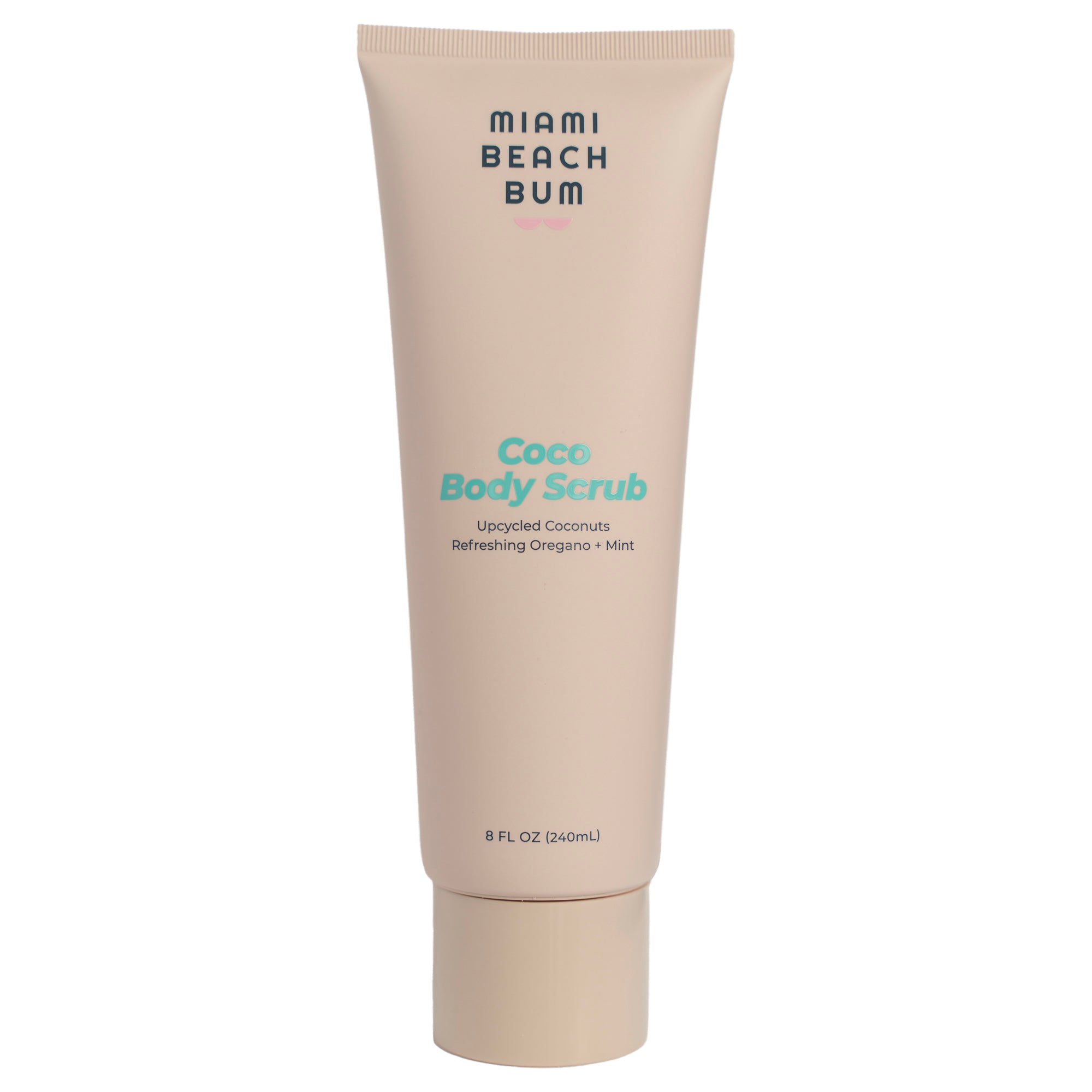
| Formulated alternative | Miamibeachbum’s Coco Body Scrub offers coconut oil’s softening benefits in a reef-safe, stabilized formula. |
Table of Contents
- What Does Coconut Oil Actually Do for Body Skin?
- How Should You Use Coconut Oil for Body Care?
- Who Should Use Coconut Oil, and Who Should Skip It?
- Which Type of Coconut Oil Works Best for Skin?
- What Does the Research Actually Show, and Where Does It Fall Short?
- Frequently Asked Questions
- Sources
What Does Coconut Oil Actually Do for Body Skin?
Coconut oil is an occlusive, meaning it forms a physical layer on skin that slows water loss rather than pulling moisture in the way a humectant like glycerin does. That distinction matters for how you use it: it works best applied over already damp or hydrated skin, not as a stand-alone hydrator on bone-dry skin.
The fatty acid profile does more than moisturize. Lauric acid, which makes up roughly half of coconut oil’s fatty acids, has documented antimicrobial and anti-inflammatory activity in lab and animal research, including activity against acne-related bacteria in vitro, according to Healthline’s clinical summary. That’s a big reason coconut oil gets recommended for mild eczema flare-ups and general irritation on the body, even though it’s not a treatment for acne itself.
Lab research adds a more specific mechanism. In vitro studies on human skin cells found that virgin coconut oil increased expression of aquaporin-3, a channel that helps skin cells manage water, along with two key barrier proteins: involucrin and filaggrin, according to research published in PMC. It appears to interact with the cells that build and repair the skin barrier.
Coconut oil’s measured effects on skin barrier markers (in vitro study)
| Marker | Change with virgin coconut oil |
|---|---|
| Involucrin expression | increased significantly |
| Filaggrin expression | increased significantly |
| TNF-α (inflammatory marker) | substantially reduced |

Clinical evidence backs up the moisturizing claim more directly. A randomized double-blind trial comparing virgin coconut oil against mineral oil in patients with mild to moderate xerosis (dry skin) found coconut oil performed comparably for improving hydration and skin-surface lipids, with no meaningful safety differences between the two, based on findings published on PubMed. Mineral oil is a dermatology-standard emollient, so matching its performance in a controlled trial is a solid benchmark for a plant-based oil.
What this adds up to, in plain terms:
- Moisturizes and softens rough, flaky body skin
- May help with xerosis and some eczema-related dryness
- Shows early wound-healing support in animal and small human studies, per Healthline
- Carries antimicrobial potential from lauric and capric acid content
How Should You Use Coconut Oil for Body Care?
Apply coconut oil to damp skin immediately after a shower or bath, while your skin is still holding water from the steam. This single habit does more for results than the amount of oil you use.
Here’s how that plays out across common body-care uses:
- Full-body moisturizer. Pat skin dry, leaving it slightly damp, then massage in a dime-to-quarter-sized amount per limb, working from ankles up.
- Targeted night treatment. For rough elbows, knees, heels, and hands, apply a thicker layer before bed and let it absorb overnight rather than rinsing it off.
- Post-exfoliation softening. After a body scrub, coconut oil replaces the moisture and oils that exfoliation strips away, which is part of why scrub-then-oil is a common two-step routine.
- Massage oil. Coconut oil’s texture and slow absorption make it a workable massage medium, though it can stain lighter fabrics.
- Lip and cuticle balm. A small dab softens dry cuticles and chapped lips, similar to how coconut oil functions in some lip-care formulas discussed by Luméra Cosmetica.
- Makeup remover for body. It dissolves waterproof sunscreen and body makeup effectively, though you’ll want to follow with a cleanser so it doesn’t sit on skin all day.
Two simple DIY blends if you want more texture:
- Coconut sugar scrub: 1 cup melted coconut oil to 1 cup granulated sugar, mixed until it forms a paste.
- Coconut salt scrub: Same ratio, swapping in fine sea salt for a firmer exfoliating texture on tougher areas like feet.
Keep quantities small when trying either recipe for the first time, and patch-test on your inner forearm for 24 hours before using it more broadly. In humid climates, a thin layer once a day is usually enough. In dry winter air, doubling up morning and night on rough spots makes more sense.
Pro Tip: Warm the oil between your palms before applying so it melts evenly, and skip hairy areas or spots prone to breakouts, since trapped oil around hair follicles is a common trigger for irritation.
Who Should Use Coconut Oil, and Who Should Skip It?
Coconut oil tends to work best for a specific skin profile, and it tends to backfire for another. Knowing which one you are saves you a week of frustrating breakouts.
Good candidates for regular use include:
- People with chronically dry or flaky skin on arms, legs, and torso
- Those managing xerosis or mild eczema-related dryness on the body
- Anyone who prefers plant-based, botanical emollients over synthetic ones
- People targeting rough patches like elbows, knees, and heels
Proceed with caution or skip it if you fall into these groups:
- Acne-prone or oily skin, especially on the chest, back, or shoulders
- A personal history of folliculitis or clogged-pore breakouts on the body
- Known sensitivity or allergy to coconut-derived ingredients
- Skin in hair-bearing, friction-prone areas like inner thighs during hot, sweaty conditions
Dermatology guidance is consistent on this point: coconut oil is a solid body moisturizer, but its comedogenic profile makes it a poor match for acne-prone facial or chest skin, according to Cleveland Clinic’s dermatology overview. The fix isn’t avoiding coconut oil entirely. It’s being selective about where on your body you use it.
If you’re unsure which camp you’re in, patch-test first: apply a small amount to your inner arm, wait 24 to 48 hours, and watch for redness, bumps, or itching. If skin stays clear, you’re likely fine to expand to larger areas. If you notice new bumps developing over the following week, particularly around hair follicles, that’s your signal to scale back or switch to a lighter, non-comedogenic oil instead. For a deeper look at what those bumps actually are, this guide to folliculitis breaks down what’s happening under the skin.
Which Type of Coconut Oil Works Best for Skin?
Not all coconut oil behaves the same way on skin, and the label matters more than most people realize. Virgin (sometimes called extra-virgin or cold-pressed) coconut oil retains more of the plant’s natural phenolic compounds and antioxidants, along with its characteristic scent and solid-at-room-temperature texture, according to a review of natural cosmetic oils. That higher bioactive content is likely part of why virgin coconut oil performs well in the barrier-repair studies referenced earlier.

Refined coconut oil goes through processing that strips out most of the scent and some of those bioactive compounds, which makes it a reasonable choice if you like the texture of coconut oil but don’t want the tropical smell lingering on your skin. Fractionated coconut oil is processed further still, removing the long-chain fatty acids so it stays liquid at any temperature. It feels lighter, absorbs faster, and layers more easily under clothing, though it also loses some of the antioxidant punch found in virgin oil.
| Attribute | Virgin/cold-pressed | Refined | Fractionated |
|---|---|---|---|
| Bioactive content | Highest (phenolics, antioxidants) | Lower | Lowest |
| Scent | Noticeable coconut aroma | Minimal | None |
| Texture | Solid below ~76°F, melts on skin | Solid, similar melt point | Always liquid |
| Comedogenic tendency | Moderate to high | Moderate to high | Moderate |
When shopping, look for labels that specifically say “virgin” or “cold-pressed” if barrier support and antioxidant content are your priority. Check for minimal added ingredients, since some jarred coconut oils include fragrance or preservatives that can irritate sensitive skin. Packaging matters too: oil stored in opaque, airtight containers holds up better against oxidation than clear jars left in direct sunlight. If reef-safe formulation matters to your broader routine, that’s worth checking on any coconut-based product you pair with sun care, not just the sunscreen itself.
What Does the Research Actually Show, and Where Does It Fall Short?
The strongest human evidence for coconut oil in body care is a randomized, double-blind clinical trial that put virgin coconut oil head-to-head against mineral oil in patients with mild to moderate xerosis. Coconut oil matched mineral oil on hydration improvement and skin-surface lipid levels, with no notable difference in safety, per the trial results on PubMed. That’s a meaningful data point because mineral oil is a well-established clinical emollient, not a low bar.
Where the evidence gets thinner is everything beyond basic hydration. Wound-healing benefits are similarly built mostly on animal models and small human studies, according to Healthline’s review of the evidence. None of this means the effects aren’t real. It means the jump from lab dish to your bathroom shelf involves some reasonable extrapolation.
Side effects are well documented even if they’re not universal. Comedogenicity is the biggest one: clogged pores, small bumps called milia, and folliculitis in hair-bearing areas show up often enough in clinical guidance that patch testing gets recommended across nearly every reputable source, including Cleveland Clinic. True allergic reactions are less common but possible, particularly for anyone with a tree nut or coconut sensitivity.
“Coconut oil isn’t a universal solution,” is the practical framing dermatologists use. It works well for body dry skin, but it needs gradual introduction and careful area selection, especially for anyone prone to breakouts.
A basic safety checklist before you commit to regular use:
- Patch-test on your inner forearm for 24 to 48 hours first
- Avoid the face, chest, and back if you’re acne-prone
- Watch hair-bearing and friction-prone areas for early bumps
- Start with once-daily use and adjust based on how skin responds
A beach-lifestyle take on where coconut oil fits
I reach for coconut oil the same way most dermatology guidance suggests: as a nighttime, post-shower treatment for genuinely dry patches, not an everyday, all-over product layered under sunscreen. It’s also worth saying plainly since it comes up constantly in beach routines: coconut oil offers no meaningful SPF protection, so it’s never a substitute for reef-safe sun care. Used in its right place, alongside mineral sunscreen rather than instead of it, coconut oil earns its spot in a beach bag.
A reef-safe way to get coconut oil’s benefits without the mess
Straight coconut oil has real upsides, but it also has real downsides for daily use: it stains sheets, melts unpredictably in a beach bag, and its comedogenic strength is hard to dial back once it’s on your skin. A formulated product solves that by controlling concentration, adding stabilizers, and pairing coconut oil with ingredients that offset its pore-clogging tendency.
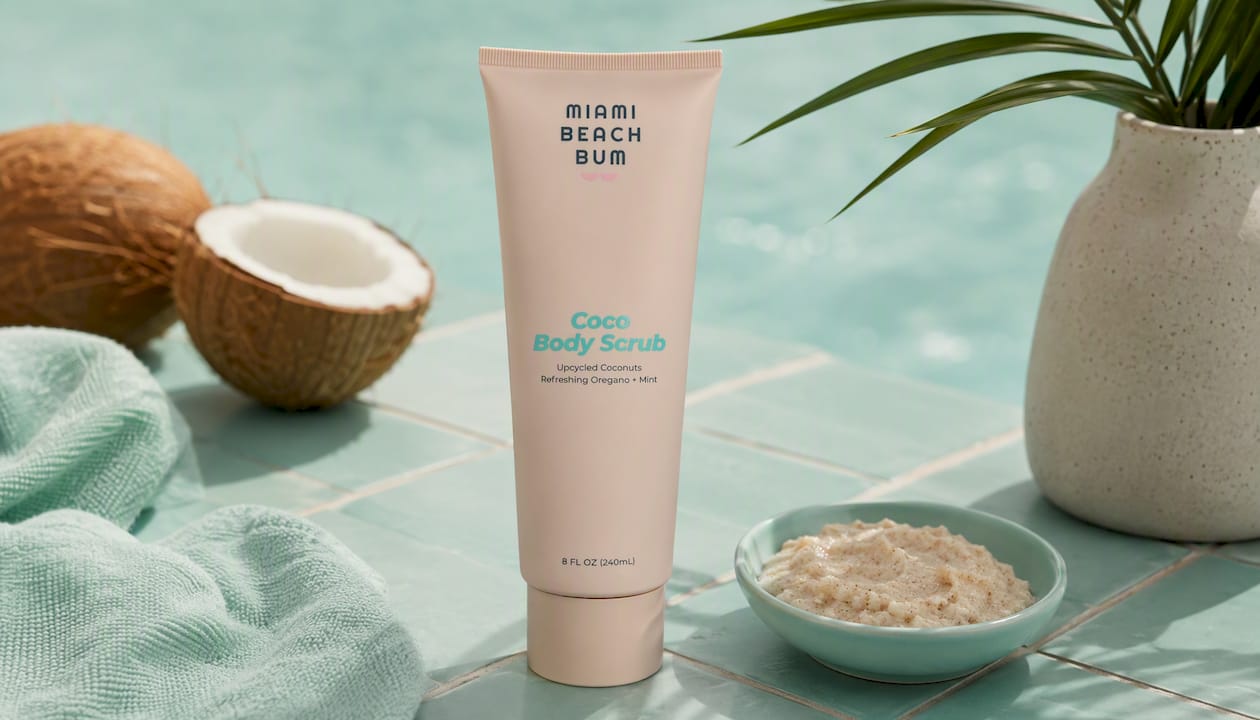
Miamibeachbum’s Coco Body Scrub is built around that idea: a reef-safe, coconut-forward formula designed for post-exfoliation softening, so you get the moisturizing payoff without applying raw oil straight onto skin that might react to it. It’s a practical middle ground between DIY coconut oil scrubs and leaving your skin under-moisturized after exfoliating. If dry, flaky body skin is your main complaint, add the Coco Body Scrub to your next shower routine and see how your skin feels the morning after.
Frequently Asked Questions
Is coconut oil good for skin on the body? Yes, for dry, non-acne-prone skin. It moisturizes effectively and shows barrier-support benefits in lab studies, though it’s less suited to acne-prone areas.
What is the role of coconut oil in body care specifically versus facial care? On the body, coconut oil acts mainly as an occlusive moisturizer for rough or dry patches. On the face, its comedogenic tendency makes it riskier for breakout-prone skin.
How often should you use coconut oil on dry skin? Once daily after showering works for most people with dry skin. In winter or on especially rough areas like heels, twice daily is reasonable.
Can coconut oil clog pores on the body? Yes. It’s considered moderately to highly comedogenic, which is why hair-bearing and friction-prone areas like inner thighs need extra caution.
Does coconut oil work as well as regular lotion? Clinical trial data shows it performs comparably to mineral oil, a standard clinical moisturizer, for hydration in dry skin, though texture preference varies by person.
This article is general information, not a substitute for advice from a qualified doctor. Consult a qualified healthcare professional about your own circumstances before acting on anything here.
Sources
- PMC6335493
- Randomized clinical trial comparing coconut oil and mineral oil (PubMed 15724344)
- Is Coconut Oil Good For Your Skin? (Cleveland Clinic)
- Coconut oil and skin (Healthline)