


Essential oils are concentrated plant extracts used for aroma and sometimes topical applications. Fragrance oils are formulated scent blends made for consistent scent performance. Use essential oils when you want a plant-derived aroma and are prepared to follow dilution guidance. Use fragrance oils when you need long-lasting, reliable scent in candles, soap, or perfume. Both can cause allergic reactions, so dilute and patch test either one before regular use.
TL;DR:
- Essential oils fade faster and can change scent over time, while fragrance oils usually deliver stronger, longer lasting results in candles, soap, and perfume.
- Before substituting oils, test a small batch and check flash point and solubility for your wax, soap, or other base.
- Some essential oils can trigger dermatitis and oxidize into stronger sensitizers, so dilute them before skin use, patch test, and store them properly.
- Broad fragrance labels may hide individual ingredients, so ask suppliers for full composition, recommended usage rates, flash points, and safety information.
Table of Contents
- What Essential Oils and Fragrance Oils Actually Are
- Scent Performance: Strength, Longevity, and Behavior in Products
- Safety and Regulation: Allergens, Dermatitis, and U.S. Rules
- Uses, Substitution, and Project Guidance
- How to Choose for Your Purpose: A Short Checklist
- Why Scent Choice Matters More on Sun-Exposed Skin
- Gentle, Reef-Safe Scent Choices for Outdoor Days
- FAQ
- Sources
What Essential Oils and Fragrance Oils Actually Are
Essential oils come from plant material through steam distillation, cold pressing, or solvent and CO2 extraction. Each method pulls out a different mix of volatile compounds, which is why a single plant can yield oils with slightly different scents and chemical profiles depending on how it was processed. The result is a complex natural mixture, often containing dozens of compounds, some therapeutic in small concentrations and others known skin irritants.
Fragrance oils work differently. They are built in a lab from synthetic aroma chemicals, isolated natural compounds, and sometimes nature-identical ingredients designed to replicate a scent without relying on the original plant source. This approach gives formulators control over cost, consistency, and shelf stability that raw botanical extraction cannot match.
Label language adds another layer of complexity:
- Parfum or fragrance usually means a proprietary blend with ingredients not individually disclosed.
- Nature-identical means a lab-made compound chemically matches one found in nature, even though it never touched a plant.
- Essential oil on its own does not guarantee purity or a single-source extraction method.
None of these terms are standardized the same way across every product category, so the wording on a label tells you less than you might expect.
Scent Performance: Strength, Longevity, and Behavior in Products
Fragrance oils typically throw stronger and last longer in candles, wax melts, and cold-process soap because they are engineered for that exact job. Essential oils are more volatile, meaning their lighter aromatic compounds evaporate faster, which is why perfumers talk about top, middle, and base notes: each layer fades at a different rate, and an essential-oil-based blend can smell noticeably different an hour after application than it did at first spray.
A few practical factors shape how either oil performs once it’s in a finished product:
- Flash point determines how hot a candle wax or soap batter can get before the scent burns off.
- Solubility affects whether an oil blends cleanly into wax, oil, or water-based bases or separates.
- Carrier base changes scent release speed, since thicker bases hold aroma longer than thin ones.
Pro Tip: Always check an oil’s flash point before adding it to hot wax. Pouring in a fragrance or essential oil above its flash point burns off the scent before the candle ever cures.
Safety and Regulation: Allergens, Dermatitis, and U.S. Rules
Neither category is automatically safer than the other. A peer-reviewed review found that essential oils are linked to allergic contact dermatitis and other adverse effects, with lavender, tea tree, peppermint, and citrus oils among the most commonly implicated. These compounds also oxidize over time, and the breakdown products can become stronger sensitizers than the original oil, which is part of why proper storage matters.

Fragrance oils carry their own transparency problem. The FDA notes that fragrance ingredients can be listed collectively as “fragrance” or “parfum,” which limits how much an allergic consumer can actually learn from the label. The FDA’s allergen guidance also points out there is no federal definition for “natural” or “organic” in cosmetics, so neither term is a safety guarantee.
A systematic review reported several cases of adverse effects from aromatherapy, most commonly dermatitis, while evidence of therapeutic benefit remained limited.
Regulatory status depends heavily on marketing language. The FDA explains that how a product is marketed determines whether it’s regulated as a cosmetic or a drug, and that plant-derived ingredients are treated the same as synthetic ones under that framework. Making a therapeutic claim can shift a product into drug territory regardless of whether the scent came from a flower or a lab.
A few handling basics apply across the board:
- Patch test any new oil on a small area before broader use.
- Dilute essential oils before topical application, since concentration varies widely by oil.
- Avoid applying citrus-based topicals before sun exposure, since several are phototoxic.
Uses, Substitution, and Project Guidance
Essential oils fit well in aromatherapy diffusers and light topical blends where plant-derived origin matters to the user. Fragrance oils tend to win in candles, soapmaking, room fragrance, and perfumery, where consistent throw and longevity matter more than botanical sourcing.
When swapping one for the other in a project, a few steps keep results predictable:
- Start with a small test batch rather than converting an entire recipe at once.
- Check the new oil’s flash point and solubility against your base before scaling up.
- Dilute conservatively and increase gradually, watching for skin reaction or scent fade.
- Compare scent strength after curing, since soap and candles mellow over days or weeks.
Pro Tip: Keep a small notebook of ratios and cure times for every oil you test. Scent memory fades fast, and notes save you from repeating the same trial twice.
Budget and sourcing also diverge. Essential oils, particularly rarer ones like rose or sandalwood, cost more per ounce due to the volume of plant material required. Fragrance oils are generally cheaper to produce at scale, though sustainability depends on the specific aroma chemicals and sourcing practices behind them rather than the category itself.
How to Choose for Your Purpose: A Short Checklist
Before buying either type of oil, weigh these factors:
- Intended use: topical, diffused, or embedded in a candle or soap base.
- Sensitivity concerns: known allergies to specific botanicals or synthetic aroma chemicals.
- Need for consistency: whether scent needs to match batch after batch.
- Budget: essential oils generally cost more for comparable scent strength.
- Transparency: whether the supplier discloses actual composition.
When comparing suppliers, ask these questions:
- What is the full composition, not just the marketing name?
- Is safety data available, including flash point and recommended usage rate?
- Does the product follow IFRA guidance, even though compliance is voluntary?
Watch for red flags: vague “fragrance” labeling on a product meant for topical use, explicit medical claims attached to an essential oil, or a supplier that can’t produce basic safety data on request.
Why Scent Choice Matters More on Sun-Exposed Skin
We formulate products with careful attention to what sits on skin exposed to sun, salt water, and heat. Sun-exposed and breakout-prone skin reacts faster to heavy fragrance loads or undiluted essential oils, which is part of why we lean toward mild, reef-safe, and transparently sourced ingredients rather than chasing strong scent throw. Getting that balance right matters more outdoors than almost anywhere else.
— Ayssa
Gentle, Reef-Safe Scent Choices for Outdoor Days
We built our lineup around the idea that sun, sweat, and salt water shouldn’t mean choosing between a pleasant scent and skin that doesn’t react. Our Bum + Body Cream targets breakout-prone skin with a gentle formulation. Our Hair Shield leave-in conditioner protects sun-exposed hair and scalp without a heavy fragrance load. Our Coco Body Scrub and Blocked SPF50 round out a routine built for outdoor life.
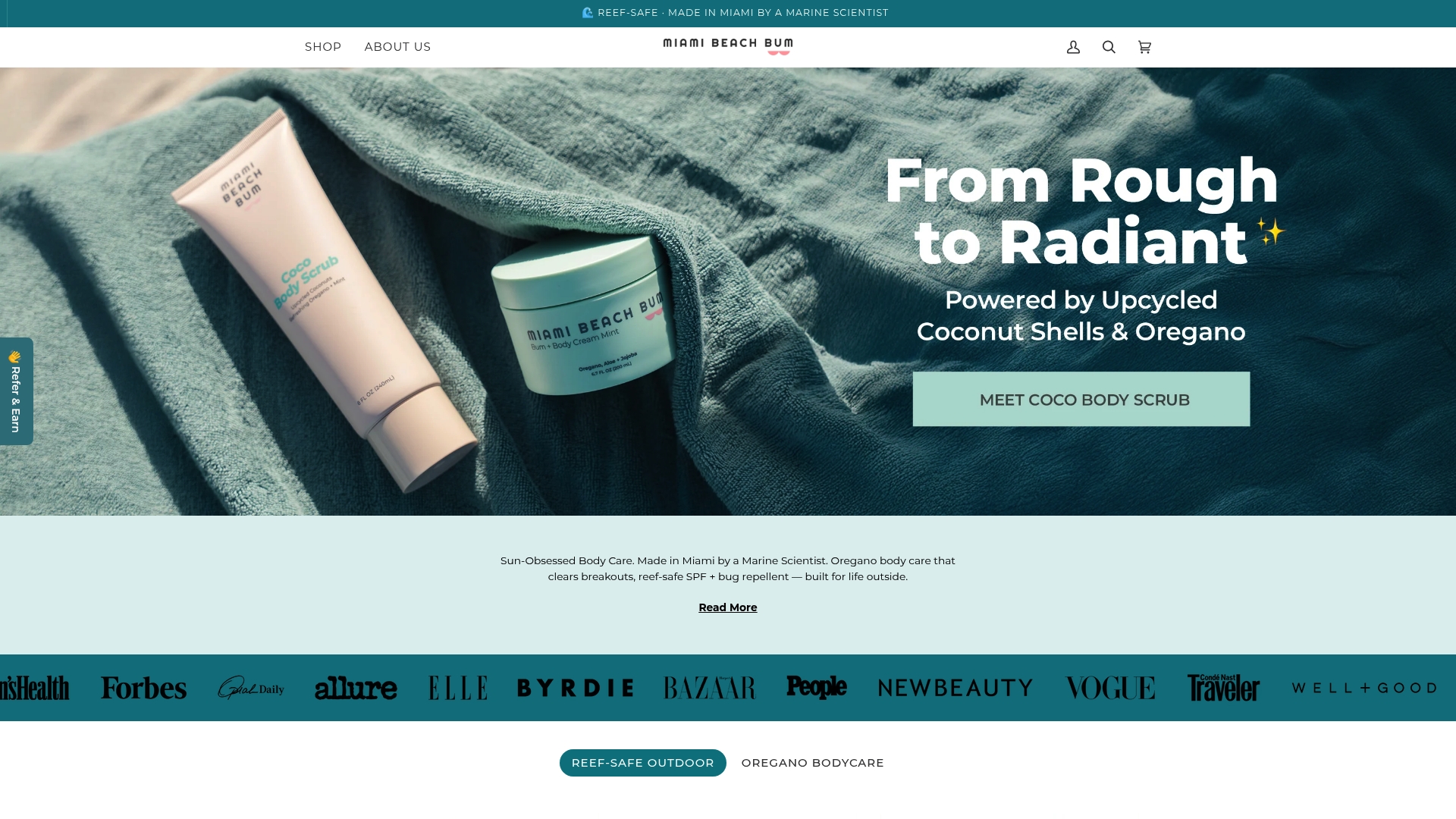
- Mineral sunscreens and body creams formulated with ethically sourced plant ingredients, no petroleum or toxic chemicals.
- Reef-safe, vegan, and cruelty-free across our Bodycare and Outdoor lines.
Browse our Bodycare collection to find a scent-mindful formulation that fits your skin.
FAQ
Can essential oils be used as fragrance?
Yes, essential oils can scent a room, a candle, or the skin, but they fade faster and smell less consistent than formulated fragrance oils. Their volatility means the aroma shifts over time as lighter compounds evaporate first.
Can I substitute fragrance oil for essential oil?
Often, yes, but check flash point and solubility first since the two behave differently in wax, oil, or water-based bases. Start with a small test batch and dilute conservatively before scaling up a full recipe.
Are essential oils healthier than perfumes?
Not necessarily. The FDA’s allergen guidance notes there’s no federal definition for “natural,” and a peer-reviewed review links essential oils to allergic contact dermatitis just as synthetic fragrances can trigger reactions.
What is the healthiest way to scent your home?
Choose whichever option, essential oil diffusers or fragrance-based candles, you can use at a mild concentration and tolerate without irritation. Ventilation and lower concentration matter more than whether the scent originated from a plant or a lab.
Sources
- Art of Prevention: Essential Oils - Natural Products Not Necessarily Safe | PMC
- Fragrances in Cosmetics | FDA